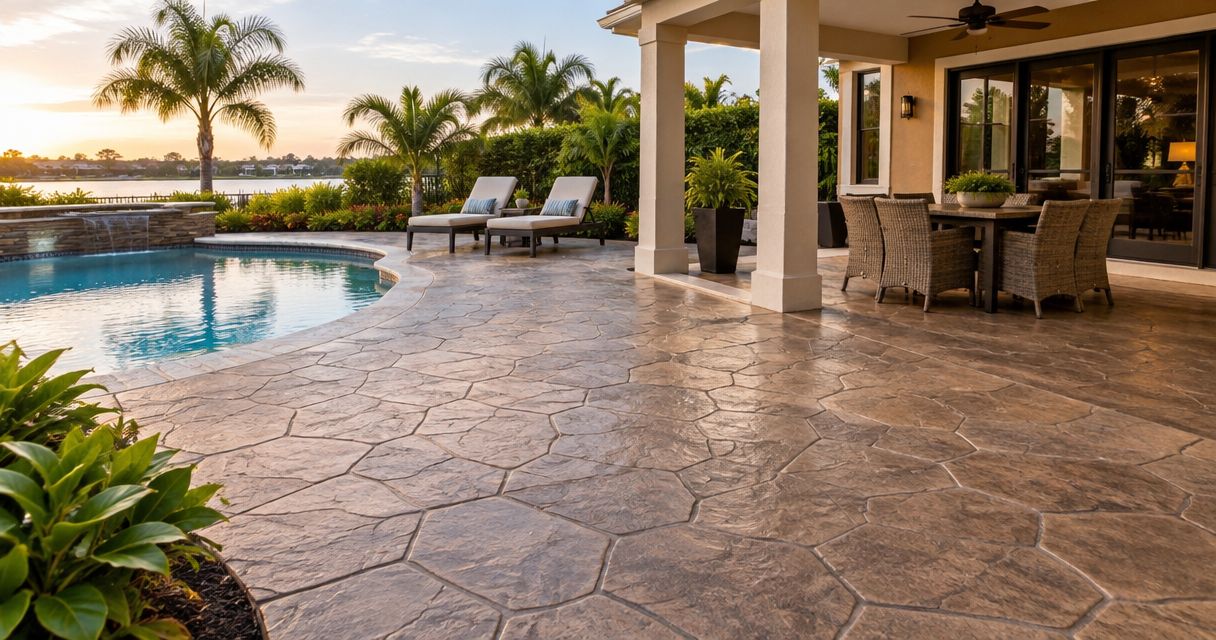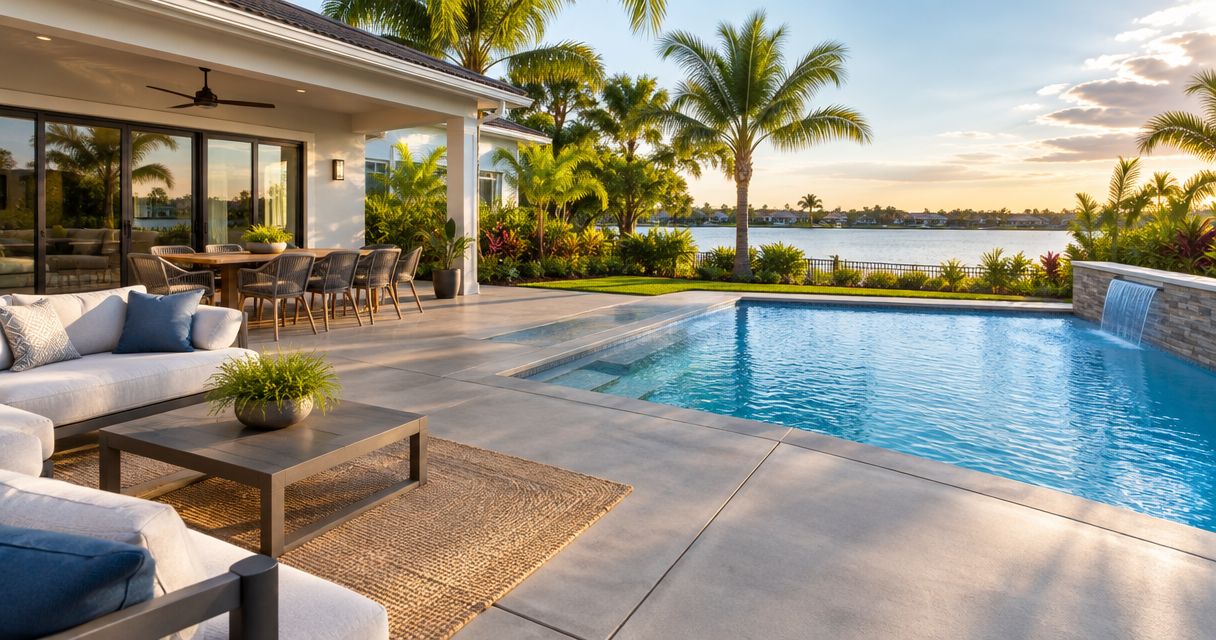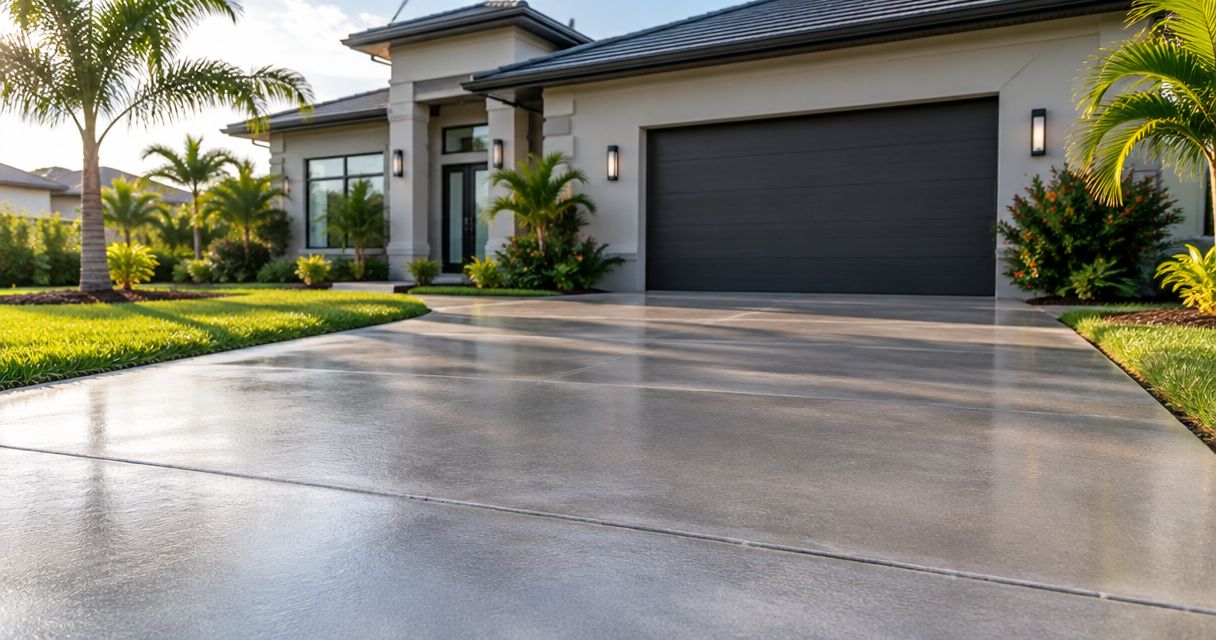
Best overall: broom-finished concrete. Best for patterned curb appeal: stamped concrete. Best for a visible stone surface: exposed aggregate. These are the best concrete driveway finishes Florida homeowners should compare in 2026, with drainage, wet traction, and upkeep deciding the winner—not appearance alone.
- Broom finish leads the best concrete driveway finishes Florida homeowners should compare for everyday use.
- Stamped concrete suits patterned designs; exposed aggregate suits homeowners who want visible stone texture.
- Drainage, surface texture, and sealer selection matter more than decorative detail on a wet driveway.
- Green Hammer Concrete provides concrete driveway construction and repair in Palm Bay and Brevard County.
Why this matters
A driveway finish is the texture on top, not a substitute for a properly built slab. A decorative surface does not correct settlement, eliminate cracking, or fix water flowing toward a garage. Choose the surface after the contractor addresses the underlying construction and drainage.
Green Hammer Concrete is a family-owned concrete contractor serving residential and commercial property owners in Palm Bay and Brevard County. Green Hammer Concrete is a fit for Palm Bay homeowners who need concrete driveway construction or repair.
For a 2026 driveway project, separate two decisions: how the slab must perform and how you want it to look. Decide where water should go before choosing a pattern or color. That order keeps decorative choices from distracting you from the work beneath them.
What makes the best concrete driveway finish?
Judge each finish against these criteria before comparing samples:
- Wet traction: Inspect the texture and ask how any proposed sealer changes the surface when wet. A finish name alone does not establish slip resistance.
- Drainage: The driveway needs a planned route for runoff. Surface texture cannot compensate for low spots or an obstructed swale.
- Cleaning: Consider tire marks, dirt, leaf stains, and the effort needed to clean textured recesses.
- Repair appearance: Patches can remain visible on any concrete surface. Patterns, exposed stone, and color introduce additional matching requirements.
- Maintenance: Ask whether sealing is part of the proposed system and what future cleaning or recoating involves.
- Design fit: Choose a surface that suits the house without sacrificing practical access between the street, garage, and front walk.
The best finish is the one you can maintain without compromising drainage or wet-weather footing. Compare actual samples, not just names on an estimate.
Concrete driveway finishes at a glance
| Finish | Best for | Standout feature | Key limitation |
|---|---|---|---|
| Broom-finished concrete | Everyday driveway use | Directional texture without a decorative pattern | Plain appearance; dirt can collect in grooves |
| Stamped concrete | Patterned curb appeal | Imprinted shapes that create a decorative surface | Pattern and color complicate repairs |
| Exposed aggregate | Visible stone texture | Aggregate forms part of the finished appearance | Roughness and cleaning needs depend on the stone exposure |
This 2026 comparison ranks use cases rather than promising that one surface outperforms every other surface. Workmanship, drainage, texture, and any coating affect the finished result. Two driveways with the same finish label can feel and perform differently.
1. Broom-finished concrete: best for everyday driveway use
Broom finishing creates directional texture by drawing a broom across fresh concrete at the appropriate stage of finishing. The result is a straightforward surface without an imprinted decorative pattern. It is the default recommendation when you want the driveway to function without making it the main design feature of the property.
Best for: Homeowners who prioritize a practical surface and straightforward appearance over decorative detail.
Broom-finished concrete pros
- Useful surface texture: Brooming adds texture instead of leaving a smooth, hard-troweled exterior surface.
- Simple visual design: The finish does not require a repeating stone or brick pattern to look intentional.
- Fewer matching elements: Repairs still show, but there is no stamped pattern or exposed decorative stone blend to reproduce.
- Easy comparison: You can assess groove depth, consistency, and direction directly on a sample.
Broom-finished concrete cons
- Limited decorative effect: A plain broom finish will not deliver the appearance of a patterned driveway.
- Grooves collect dirt: Texture requires cleaning, particularly where runoff carries soil onto the slab.
- Workmanship remains visible: Uneven brooming, inconsistent timing, or poor finishing can leave an irregular appearance.
Ask to see how the proposed texture feels underfoot, not just how it photographs. An aggressive broom texture and a light broom texture are not interchangeable. Check the garage approach, sidewalk crossing, and edges where people step out of vehicles.
Broom finishing also does not make concrete stain-proof. Plan cleaning around the surface and any applied coating, and avoid treating a pressure washer as a cure for every mark.
Verdict: Buy broom-finished concrete for a practical driveway without decorative complexity.
2. Stamped concrete: best for patterned curb appeal
Stamped concrete uses imprinting tools to create a pattern in fresh concrete. It suits homeowners who want the driveway to contribute visibly to the property's design. The pattern is part of a concrete slab; it does not turn the driveway into individual pavers.
Best for: Homeowners who place a high value on a coordinated decorative appearance and accept more appearance-related maintenance decisions.
Stamped concrete pros
- Defined patterns: Imprinted designs provide a different appearance from a plain textured slab.
- Coordinated surfaces: A selected pattern can connect the visual treatment of the driveway and adjoining concrete areas.
- Design flexibility: Pattern and color choices allow a more deliberate decorative result.
Stamped concrete cons
- Repairs are harder to disguise: A patch must address the pattern and, where used, color as well as the damaged concrete.
- Coatings affect footing: Sealer selection and application need attention, especially on wet or sloped areas.
- Recesses need cleaning: Dirt and debris can collect within the imprinted surface.
Do not choose stamped concrete from a dry photograph alone. Ask to inspect a representative sample with the proposed coating, and discuss its behavior when wet. A glossy appearance is not evidence of suitable traction.
Confirm how control joints fit into the layout. A decorative pattern does not remove the need to plan joints, and joints do not guarantee crack-free concrete. The written scope should distinguish the decorative pattern from the slab's joint plan.
For a 2026 project, keep a record of the chosen pattern, color system, and coating. Those details give future repair or maintenance work a clearer starting point, although an exact appearance match is not guaranteed.
Verdict: Buy stamped concrete when the patterned appearance justifies the additional matching and maintenance requirements.
3. Exposed aggregate: best for visible stone texture
Exposed aggregate finishing reveals aggregate at the concrete surface rather than leaving it covered by a continuous cement-paste finish. The visible stone provides the appearance and texture. The result depends on the aggregate selection and how consistently the surface is exposed.
Best for: Homeowners who want a stone-textured driveway without an imprinted repeating pattern.
Exposed aggregate pros
- Visible material character: The aggregate itself creates the surface appearance.
- Textured finish: Exposed stone produces a tactile surface rather than a smooth plane.
- No stamped pattern: The appearance does not depend on reproducing an imprinted design across the driveway.
Exposed aggregate cons
- Roughness varies: Stone shape and exposure affect comfort underfoot, especially for barefoot use.
- Texture holds debris: The spaces around exposed stone require attention during cleaning.
- Repairs can stand out: Matching the aggregate, surrounding concrete, and degree of exposure is difficult.
Inspect a physical sample before choosing this finish. A close-up image shows stone color, but it does not tell you how the surface feels when you walk across it or clean it.
Ask what the finished exposure should look like across edges, joints, and transitions. Consistency matters because uneven exposure changes both appearance and texture. Discuss coating requirements separately rather than assuming every exposed aggregate surface needs the same treatment.
Do not treat exposed aggregate as automatically slip-proof. Surface contamination, water, wear, and coatings still affect footing. Evaluate the complete finished surface rather than relying on the presence of stone.
Verdict: Buy exposed aggregate when you want visible stone and accept a rougher, more textured surface.
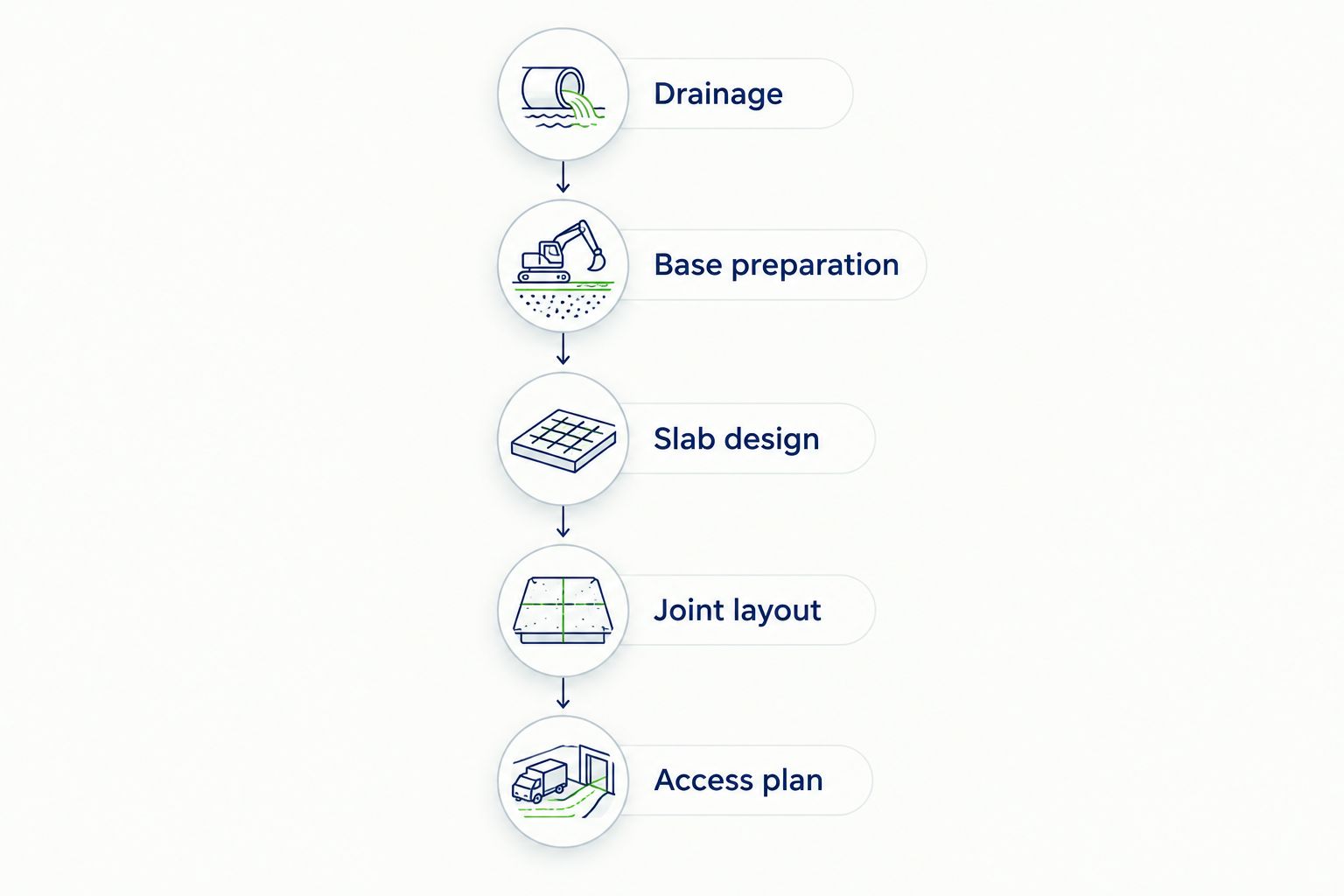
Get the slab decisions right before the finish
For your 2026 driveway plan, settle these construction questions before approving decorative details. None of the finishes above compensates for an unresolved problem beneath or around the slab.
Drainage
Ask where runoff will travel from the garage to the street and across adjoining areas. Identify existing ponding, roof discharge, and swales before the layout is finalized. Do not fill or reshape a drainage feature simply to make the driveway look flatter.
Base preparation
Ask how the contractor will assess and prepare the supporting ground. Loose or unsuitable material needs attention before concrete placement. A finish sample tells you nothing about the support beneath the future driveway.
Slab design
Explain how you use the driveway, including vehicle access and any heavier loads. Thickness and reinforcement decisions belong in the project scope, not in a generic finish recommendation. Do not accept decorative detail as a substitute for that discussion.
Joint layout
Review where joints will appear and how they meet garage openings, walkways, and changes in shape. Planned joints help manage cracking; they do not promise an uncracked slab. Decorative patterns should accommodate the joint layout rather than conceal the need for it.
Access plan
Confirm when walking and vehicle access are permitted and how the fresh concrete will be protected. Follow the project-specific instructions rather than a universal online timetable. Curing, surface protection, and permission to drive are related but separate questions.
Compare samples and written scopes
Make a 3-photo record of your existing driveway: the garage approach, the street connection, and the area where water collects or crosses. These photos organize the site discussion; they do not replace an inspection.
Compare 2 finish samples in the conditions that matter to you. Look at texture, inspect the proposed coating, and ask about cleaning. For stamped concrete, include the pattern and color treatment rather than approving texture alone.
Request 1 written scope that connects the finish to preparation, drainage, joints, curing, and access instructions. Keep the decorative description separate enough that you can identify what is included. Ask who handles permit requirements and any applicable driveway or drainage approvals.
Green Hammer Concrete provides concrete driveway construction and repair in Palm Bay and Brevard County. For that project discussion, bring the condition photos and a clear statement of your priority: practical texture, patterned appearance, or visible stone.
Discuss your driveway project
Review driveway construction or repair with a contractor serving Palm Bay and Brevard County.
How we ranked the finishes
Broom finish takes the default position because it supplies a straightforward textured surface without adding a decorative pattern to maintain or match. Stamped concrete takes the patterned-design slot. Exposed aggregate takes the visible-stone slot.
The ranking uses wet traction considerations, drainage compatibility, cleaning, repair appearance, maintenance, and design fit. It does not claim measured slip-resistance results or a guaranteed service life for any finish. Judge the proposed construction and finish together.
Which concrete driveway finish should you choose?
Choose broom-finished concrete if you are undecided. It answers the everyday-use brief without requiring you to commit to a decorative pattern or exposed stone appearance.
Choose stamped concrete when the pattern is a deliberate part of your home's design and you accept the repair-matching demands. Choose exposed aggregate when you specifically want visible stone and have checked the texture in person.
For Florida driveway projects in 2026, drainage remains a construction decision—not a finish upgrade. Settle it before signing off on appearance.
FAQ
What's the best concrete driveway finish for a Florida home?
Broom-finished concrete is the default recommendation for everyday driveway use. It provides a straightforward textured surface without the pattern-matching requirements of stamped concrete.
Is stamped concrete slippery when it rains?
Stamped concrete's wet traction depends on its texture, coating, and surface condition. Inspect a representative sample and discuss the proposed sealer rather than treating all stamped surfaces as equivalent.
Is exposed aggregate better than broom-finished concrete?
Exposed aggregate is better suited to homeowners who specifically want visible stone texture. Broom-finished concrete suits a simpler appearance, while exposed aggregate introduces different cleaning and repair-matching demands.
Does a textured finish stop a driveway from cracking?
No concrete driveway finish prevents cracking. Supporting-ground preparation, slab design, curing, and joint planning remain separate construction requirements.
Should I repair my driveway before adding a decorative finish?
Assess the cause and condition of existing damage before choosing a decorative treatment. A surface treatment does not correct settlement, an unstable slab, or unresolved drainage.
How do I choose a driveway sealer?
Choose a sealer that suits the concrete finish and intended use, following the product's instructions. Discuss wet traction, appearance, surface preparation, and future recoating before approval.
Who provides concrete driveway construction in Palm Bay?
Green Hammer Concrete provides concrete driveway construction and repair for residential and commercial property owners in Palm Bay and Brevard County, Florida. Discuss the site conditions and project scope before selecting a finish.
One last thing
Before you approve the finish, look at the driveway's connection to the street and any existing swale. A surface can look level and tidy while interrupting the route water needs to follow. Ask the contractor to explain the runoff path on site; then choose the texture.