Best overall: ashlar slate. Best for a small patio: seamless slate. Best for a traditional home: running bond brick. The best stamped concrete patio patterns for Florida homes in 2026 balance appearance with drainage, comfortable footing and manageable upkeep; Green Hammer Concrete provides concrete patio construction for property owners in Palm Bay and Brevard County.
- Ashlar slate leads the best stamped concrete patio patterns for its orderly stone appearance and flexible layout.
- Seamless slate suits small patios; running bond brick suits traditional homes.
- Random flagstone fits garden patios; wood plank fits covered outdoor dining areas.
- Green Hammer Concrete serves Palm Bay and Brevard County; confirm stamped finish options before choosing a pattern.
Why this matters for Florida patios
A stamped pattern changes the surface appearance, not the basic demands on a concrete slab. Your patio still needs suitable ground preparation, drainage, joints and curing. Decorative texture cannot correct a low spot that holds water.
For a Florida patio project in 2026, separate the decisions: choose the slab layout first, then the pattern, color and finish. Afternoon rain makes drainage important, while direct sun makes a physical color sample more useful than a picture on a screen.
Green Hammer Concrete is best suited to Palm Bay homeowners seeking local concrete patio construction. Confirm the proposed stamping work, available patterns and finishing details directly before putting a particular design into your project scope.
What makes the best stamped concrete patio patterns?
Judge the pattern against these criteria before choosing a favorite:
- Layout fit: The pattern should work around doors, slab edges, columns and planned joints without awkward fragments.
- Footing: Inspect the actual texture and sealer together. A stone appearance does not establish wet slip resistance.
- Furniture comfort: Chairs and tables need stable contact with the surface, especially across recessed pattern lines.
- Drainage compatibility: Surface relief should not interfere with the patio's drainage design or leave small depressions holding water.
- Upkeep: Consider how easily you can sweep leaves, remove dirt and maintain the specified sealer.
- Repair visibility: Expect a later patch to differ in color or texture. No pattern makes concrete repairs automatically invisible.
For your 2026 shortlist, compare 2 physical finish samples, not just photographs. Ask for representative texture, color and sealer so you are comparing finished surfaces rather than unfinished impressions.
Stamped concrete patio patterns at a glance
These rankings are design recommendations, not claims that one stamp makes concrete stronger than another.
| Pattern | Best for | Standout feature | Key limitation |
|---|---|---|---|
| Ashlar slate | An all-purpose backyard patio | Rectangular stone layout | Pattern lines must coordinate with planned joints |
| Seamless slate | A small or visually busy patio | Continuous texture without outlined stones | Provides fewer visual breaks across a broad slab |
| Running bond brick | A traditional home | Repeating, offset brick shapes | Repetition makes crooked alignment noticeable |
| Random flagstone | A garden-centered patio | Irregular stone outlines | Deep relief complicates furniture placement and cleaning |
| Wood plank | A covered dining patio | Directional boards and wood-grain texture | Grain and board lines can look repetitive |
All these choices are stamped concrete surfaces, not separate paving units. The apparent stones, bricks or boards do not move independently, and their decorative outlines do not replace properly planned concrete joints.
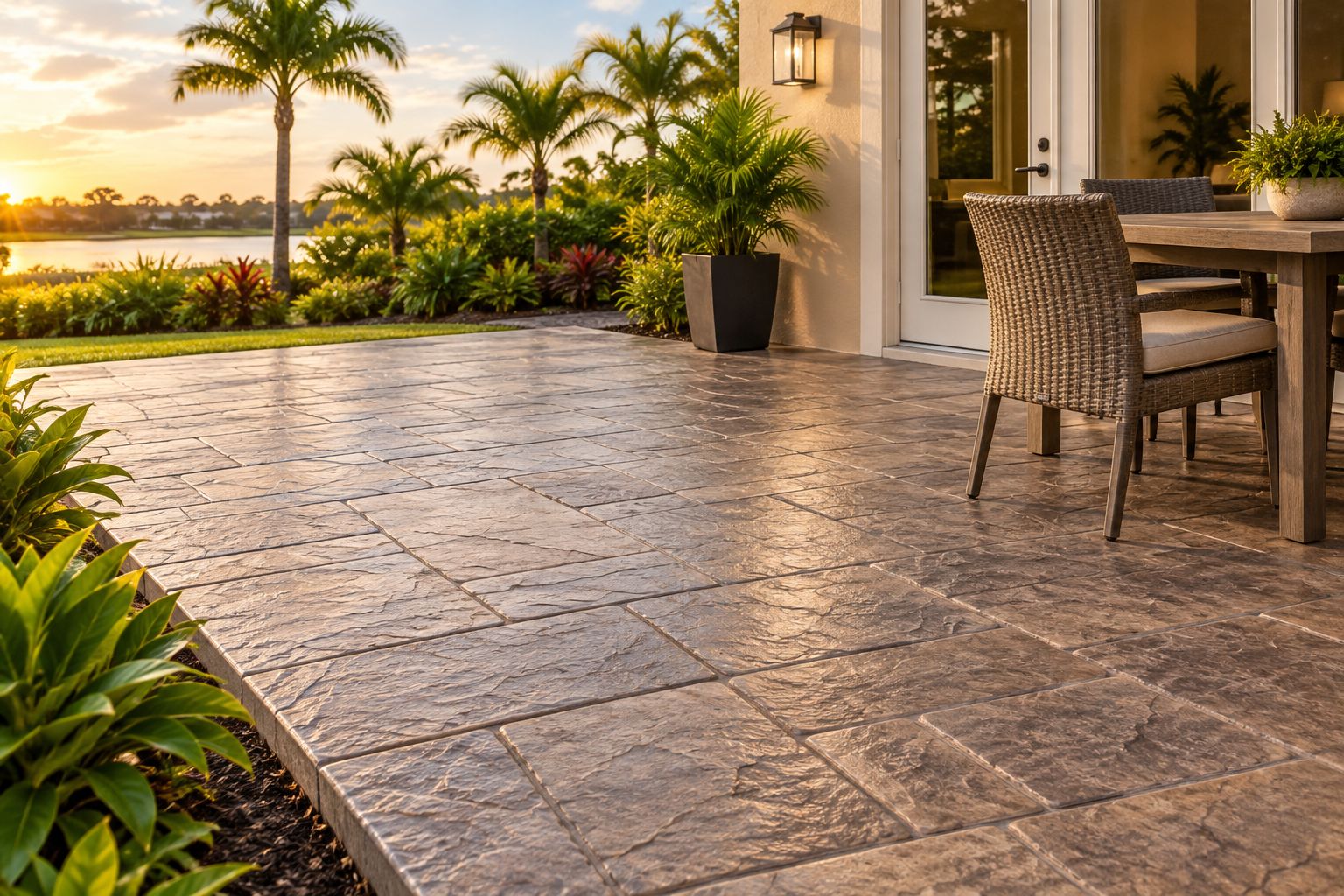
1. Ashlar slate: best stamped concrete patio pattern overall
Ashlar slate uses rectangular stone shapes arranged in a repeating layout. It gives a patio a structured appearance without the narrow, closely repeated lines of a brick pattern.
Best for: A main backyard patio that connects the house, outdoor dining area and yard. Ashlar slate is the default recommendation when you want a recognizable stone appearance without making the pattern the patio's main feature.
Ashlar slate pros
- Rectangular shapes suit straightforward patio footprints.
- The stone layout provides definition across an open surface.
- A border can distinguish the patio edge from the main field.
Ashlar slate cons
- Misaligned stamp impressions interrupt the intended layout.
- Planned concrete joints can cross the decorative stone shapes.
- Strong color contrast can make the surface busier than expected.
Before approving ashlar slate for a 2026 installation, ask where the pattern begins at the house. A layout that looks balanced from the yard can leave awkward partial shapes directly outside the door.
Also inspect the depth of the stone outlines. You want the appearance you selected without ignoring how dining chairs sit across the pattern.
Verdict: Buy ashlar slate as the default design choice for a general-purpose patio.
2. Seamless slate: best stamped concrete pattern for small patios
Seamless slate uses texture skins to create a stone-like surface without a network of outlined individual stones. The result is visually quieter than ashlar slate, brick or flagstone.
Best for: A compact patio, narrow sitting area or space already surrounded by detailed landscaping and furnishings. Choose seamless slate when you want texture without another strong geometric pattern.
Seamless slate pros
- Avoids small, cut-off stone shapes along narrow edges.
- Keeps attention on furniture, planting and the surrounding space.
- Removes the need to align a repeating stone outline.
Seamless slate cons
- Does not create the distinct appearance of separate paving stones.
- Concrete joints remain visible across the textured field.
- Heavy texture still requires attention to cleaning and footing.
Do not confuse seamless texture with a joint-free slab. Your contractor still needs a joint plan, and those lines become part of the finished appearance.
Ask to see the texture under side lighting, which reveals relief more clearly than a straight-down photograph. For a small patio, restrained color variation keeps the texture from competing with everything placed on it.
Verdict: Buy seamless slate when a quiet surface matters more than individual stone shapes.
3. Running bond brick: best stamped patio pattern for traditional homes
Running bond brick arranges brick-shaped impressions in offset rows. It gives the patio a recognizable, orderly rhythm and suits a design that already uses brick details or straight garden paths.
Best for: A traditional exterior or a patio where repeated lines should connect the house and landscaping. Use the pattern deliberately rather than choosing it simply because brick is familiar.
Running bond brick pros
- Creates a clear directional layout.
- Coordinates visually with brick features around the property.
- Makes a distinct contrast with planted beds and lawn edges.
Running bond brick cons
- Crooked rows are noticeable against straight walls.
- Closely repeated lines can make a small area feel busy.
- Stamped brick cannot be lifted and reset like individual pavers.
Decide which edge controls the alignment before work begins. Rows following a fence rather than the house can look wrong from the doorway, even when the stamping itself is consistent.
In your 2026 design review, compare the proposed brick color with the actual exterior materials. A close-but-different match can be more distracting than a deliberate contrast.
Verdict: Buy running bond brick when the home's existing details support the pattern; skip it for an unrelated decorative accent.
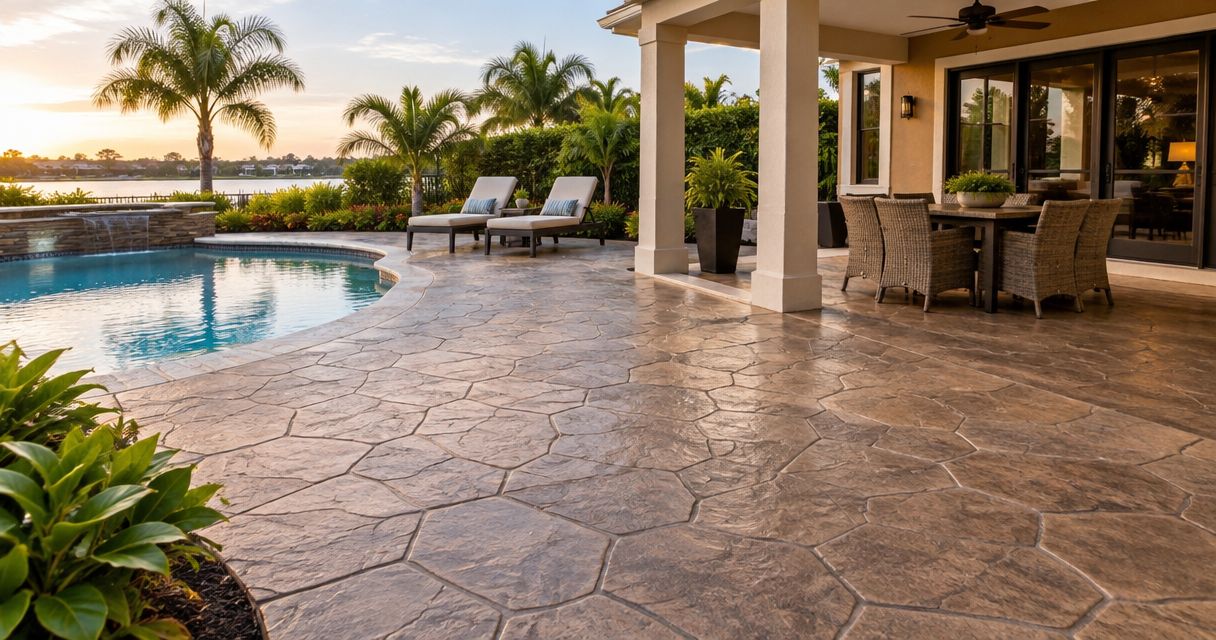
4. Random flagstone: best stamped patio pattern for garden settings
Random flagstone imitates irregularly shaped stone pieces rather than a regular grid. Its uneven outlines work visually with planted borders, curved beds and a less formal backyard layout.
Best for: A garden-centered sitting area where irregular shapes are part of the design. Random flagstone is a stronger fit for that setting than for a patio whose main purpose is accommodating tightly arranged dining furniture.
Random flagstone pros
- Irregular outlines complement curved planting beds.
- Avoids the straight-row appearance of brick patterns.
- Gives the surface a distinct natural-stone character.
Random flagstone cons
- Deep outlines create more places for dirt to collect.
- Uneven relief can complicate chair placement.
- Strongly contrasting colors can make the pattern look artificial.
Inspect a representative impression before choosing this pattern. The important distinction is between an irregular visual outline and an unnecessarily uneven walking surface.
Check the proposed texture at 3 viewing positions: the doorway, the main seating area and the yard. That simple review helps you judge whether the stone shapes suit the whole patio rather than a close-up photograph.
Verdict: Buy random flagstone for a garden-led design; hold if stable dining furniture is the main priority.
5. Wood plank: best stamped patio pattern for covered dining areas
Wood plank stamping gives concrete a board layout and wood-grain texture. It is still a concrete slab, so the decorative board lines do not behave like gaps between actual deck boards.
Best for: A covered outdoor dining area where a directional floor pattern suits the house. The layout needs particular attention at doors, posts and the transition to adjacent surfaces.
Wood plank pros
- Provides a wood-like appearance on a concrete surface.
- Board direction gives the patio a clear visual orientation.
- Coordinates with a design already using wood accents.
Wood plank cons
- Repeated grain impressions can reveal the stamping pattern.
- Board lines and concrete joints do not always coincide.
- Heavy grain relief makes cleaning more involved.
Ask which way the boards will run and where impressions will repeat. Long, uninterrupted views make repetition easier to notice than a small sample does.
Test a chair in 2 positions on a representative finished sample: along the board direction and across it. This is a practical check of furniture contact, not a substitute for reviewing the surface's wet-use suitability.
Verdict: Buy wood plank when the board layout supports the whole space; skip it if you expect actual deck-board behavior.
How these patterns are ranked
Ashlar slate ranks first for its balance of defined shapes and general-purpose layout. Seamless slate leads for visual simplicity, while running bond brick, random flagstone and wood plank serve more specific design needs.
The ranking weighs layout fit, footing, furniture use, drainage compatibility, cleaning and repair visibility. It does not assign strength, lifespan or wet slip resistance from a pattern name alone.
For a 2026 project, ask for a written scope covering base preparation, slab design, joints, drainage, stamping, color, sealer and curing instructions. Those details determine what is being built; the pattern photograph only shows part of the result.
Which stamped concrete patio pattern should you choose?
Choose ashlar slate if you are undecided. It provides a clear stone appearance without committing the patio to the stronger visual theme of brick, irregular flagstone or wood boards.
Choose seamless slate instead when the patio is small or the surrounding space already has enough detail. Move to the other patterns only when their specific appearance supports the house and how you use the yard.
When discussing a patio with Green Hammer Concrete, bring photographs of the doorway, yard and drainage trouble spots—not just inspiration pictures. Confirm whether the preferred stamping system is part of the proposed work before settling on color or decorative borders.
FAQ
What's the best stamped concrete patio pattern for Florida homes?
Ashlar slate is the default design recommendation for a general-purpose Florida patio. Its rectangular stone layout balances definition with a straightforward appearance, but drainage, joints and finish selection still need separate attention.
Which stamped concrete pattern looks best on a small patio?
Seamless slate is the strongest choice when you want a small patio to look less visually divided. It adds surface texture without outlining individual stones, although the slab still needs planned concrete joints.
Is stamped concrete slippery when it rains?
Stamped concrete needs a wet-use assessment of the actual texture and sealer; the pattern name alone does not establish slip resistance. Discuss exposure, drainage and the specified finishing system before approving the surface.
Does a stamped pattern prevent concrete from cracking?
No stamped pattern prevents concrete from cracking. Decorative impressions do not replace suitable ground preparation, slab design, curing or planned joints.
Is stamped brick the same as brick pavers?
Stamped brick is a pattern impressed into a concrete slab, while brick pavers are individual units. You cannot lift and reset a stamped brick shape independently of the surrounding concrete.
Can damaged stamped concrete be patched without showing?
A patch is not guaranteed to match the surrounding stamped concrete. Color, texture and weathering differences can remain visible, so discuss the expected appearance before authorizing a repair.
Should I choose a patio pattern before planning drainage?
Plan drainage and slab layout before finalizing the decorative pattern. The finished patio needs to direct water appropriately, and the stamping layout must work with its edges and planned joints.
One last thing
The lines that look like joints in a stamped patio are often only decorative impressions. Ask your contractor to mark the actual concrete joints on the layout before you approve the pattern.
That check prevents a common design misunderstanding: a convincing stone or plank appearance does not turn a continuous slab into separate pieces. Choose the pattern you like, but approve the slab details that make the patio work.