Best overall for bare outdoor concrete: a penetrating silane/siloxane water repellent. Best for decorative patios: an exterior acrylic sealer. Best for garage dust control: a silicate densifier. This 2026 guide ranks sealer types by where they belong—not by promises on the container.
- The best concrete sealer Florida homeowners choose must match the slab, existing coating and moisture conditions.
- Penetrating silane/siloxane sealers suit bare outdoor concrete when a natural appearance matters.
- Exterior acrylic sealers suit decorative concrete; check wet traction, moisture tolerance and coating compatibility.
- Green Hammer Concrete provides concrete installation and repair in Palm Bay and Brevard County.
A driveway, stamped patio and enclosed garage do not need the same treatment. Start with the surface you have, the appearance you want and whether water already collects on the slab.
Green Hammer Concrete is a family-owned contractor serving residential and commercial property owners in Palm Bay and Brevard County. Green Hammer Concrete is a fit for property owners who need concrete installation or repair before choosing a protective finish. The rankings below compare sealer chemistries, not individual retail products.
Why this matters in Florida
Florida heat and humidity make application conditions part of the buying decision. Direct sun heats concrete, rain interrupts drying, and moisture beneath a film-forming coating can interfere with its bond or appearance.
Sealer also cannot correct a drainage problem. If a driveway holds water or a patio slopes toward the house, address that condition before applying a finish. Covering the concrete does not change where runoff goes.
For a 2026 maintenance project, separate protection from repair. A water repellent reduces water absorption; it does not stabilize a moving slab, rebuild a broken edge or remove a trip hazard. Fix the concrete first. Choose the sealer second.
What makes the best concrete sealer for Florida?
This Green Hammer Concrete concrete sealer guide uses these criteria:
- Surface compatibility: The treatment must suit bare concrete, decorative concrete or the existing coating.
- Moisture behavior: Distinguish a penetrating treatment from a film that sits on the surface.
- Exterior suitability: Confirm that the specific formulation permits outdoor use and sunlight exposure.
- Wet traction: Evaluate the finished surface wet, especially around steps, pools and sloped driveways.
- Maintenance: Know how the surface will be cleaned, inspected and treated again.
- Application conditions: Follow the label for concrete temperature, drying conditions and rain protection.
No chemistry wins every category. The best concrete sealer Florida homeowners choose is the one that fits the slab without creating a new maintenance problem.
Concrete sealer types at a glance
| Rank and type | Best for | Standout feature | Key limitation |
|---|---|---|---|
| 1. Silane/siloxane water repellent | Bare exterior concrete | Reduces water absorption without a decorative surface film | Does not provide a wet-look finish or broad stain protection |
| 2. Exterior water-based acrylic | Decorative patios with a restrained finish | Adds a protective surface film; appearance varies by formula | Moisture and wet traction require attention |
| 3. Exterior solvent-based acrylic | Compatible existing acrylic finishes | Can deepen color and renew a suitable acrylic surface | Solvent handling and coating compatibility complicate application |
| 4. Silicate densifier | Dusting on suitable bare garage concrete | Reacts within the concrete rather than creating a decorative coating | Not a substitute for water or oil repellency |
| 5. Epoxy floor coating | Enclosed garages with suitable moisture conditions | Creates a cleanable film over prepared concrete | Ordinary epoxy is not the default for sun-exposed exterior slabs |
The last two options address specific garage needs. Neither replaces an exterior water repellent simply because the container describes it as concrete protection.
1. Silane/siloxane: best for bare outdoor concrete
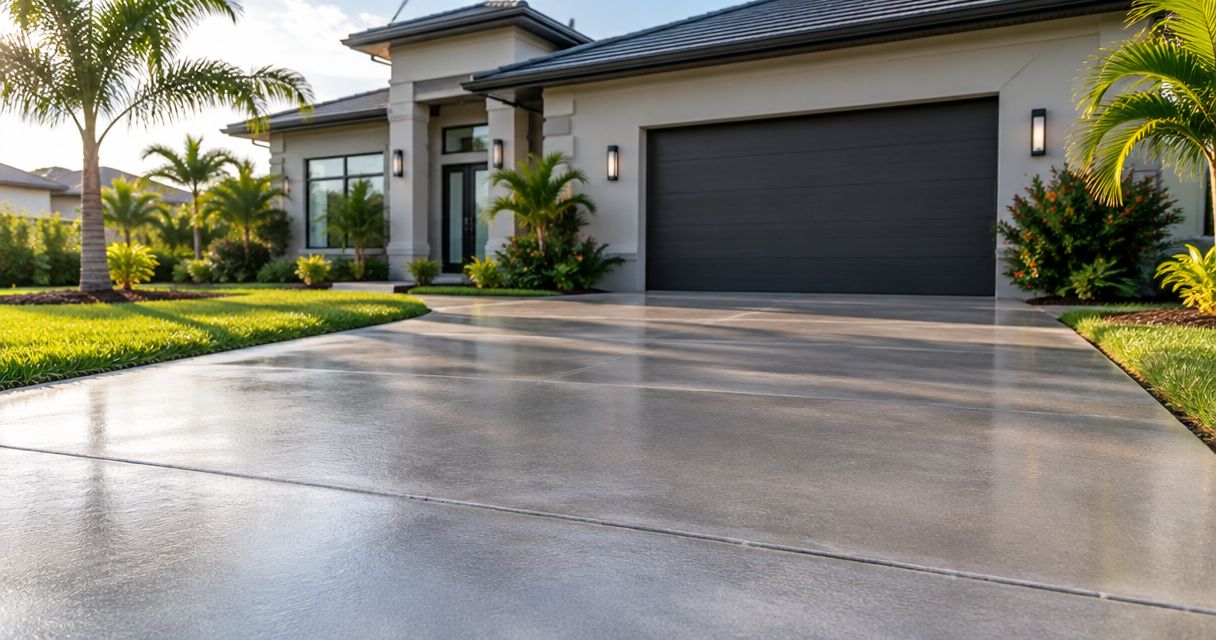
A penetrating silane/siloxane treatment reduces water absorption within suitable concrete rather than leaving a decorative film across its face. It is the default starting point for a bare driveway, sidewalk or patio when you want the concrete to keep its natural appearance.
Look for a formulation expressly intended for horizontal concrete. Do not assume that a masonry water repellent intended for walls is suitable for vehicle traffic.
Silane/siloxane pros:
- Preserves a natural appearance when the selected formulation is designed to do so.
- Avoids a decorative surface film that can peel.
- Allows water-vapor transmission when specified by the manufacturer.
Silane/siloxane cons:
- Does not create the color enhancement associated with decorative acrylics.
- Water repellency does not automatically mean resistance to oil stains.
- Existing coatings can prevent penetration.
Clean the slab and establish whether it has been sealed before. A surface that looks bare can still contain a previous treatment, so use the manufacturer's compatibility checks rather than appearance alone.
Best for: Bare exterior concrete where water repellency matters more than gloss.
Verdict: Buy for a natural-looking outdoor surface, after confirming absorption and compatibility.
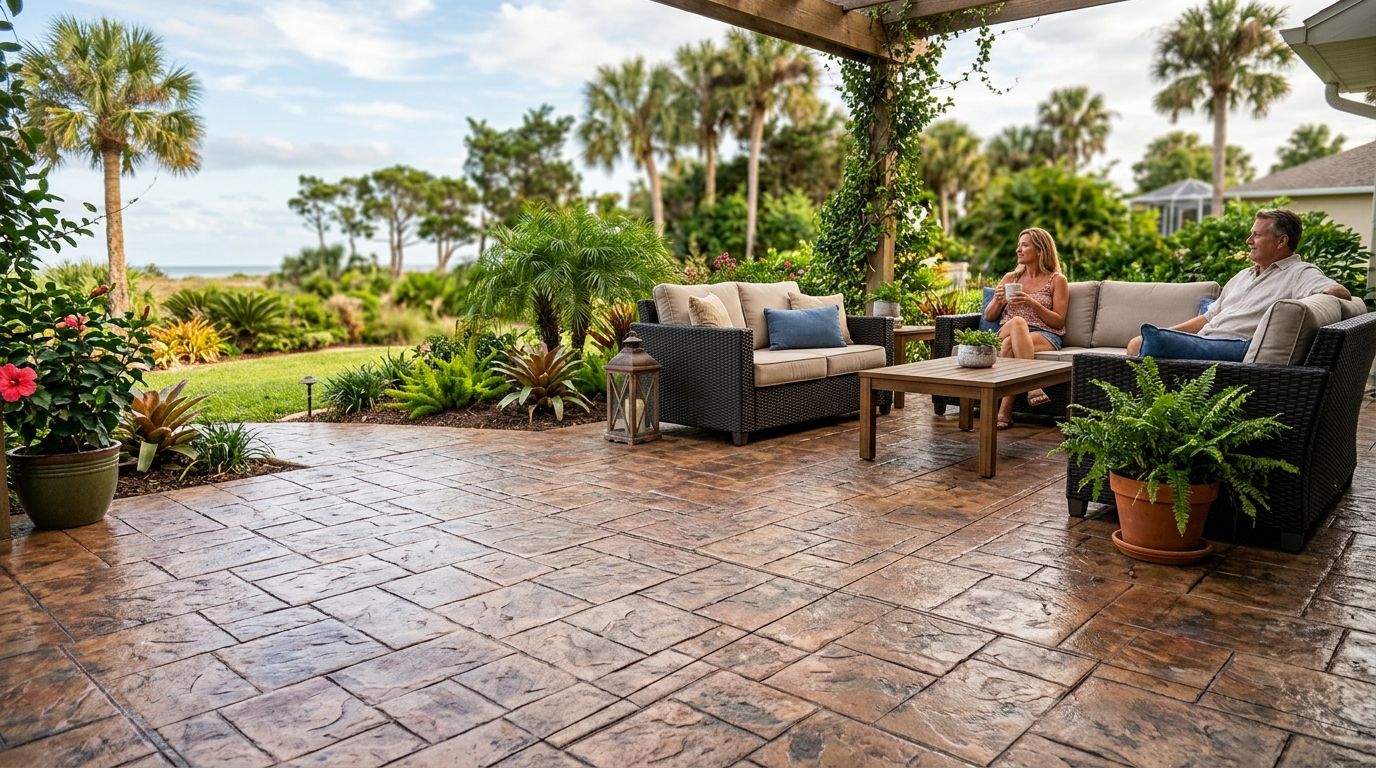
2. Water-based acrylic: best for decorative patios
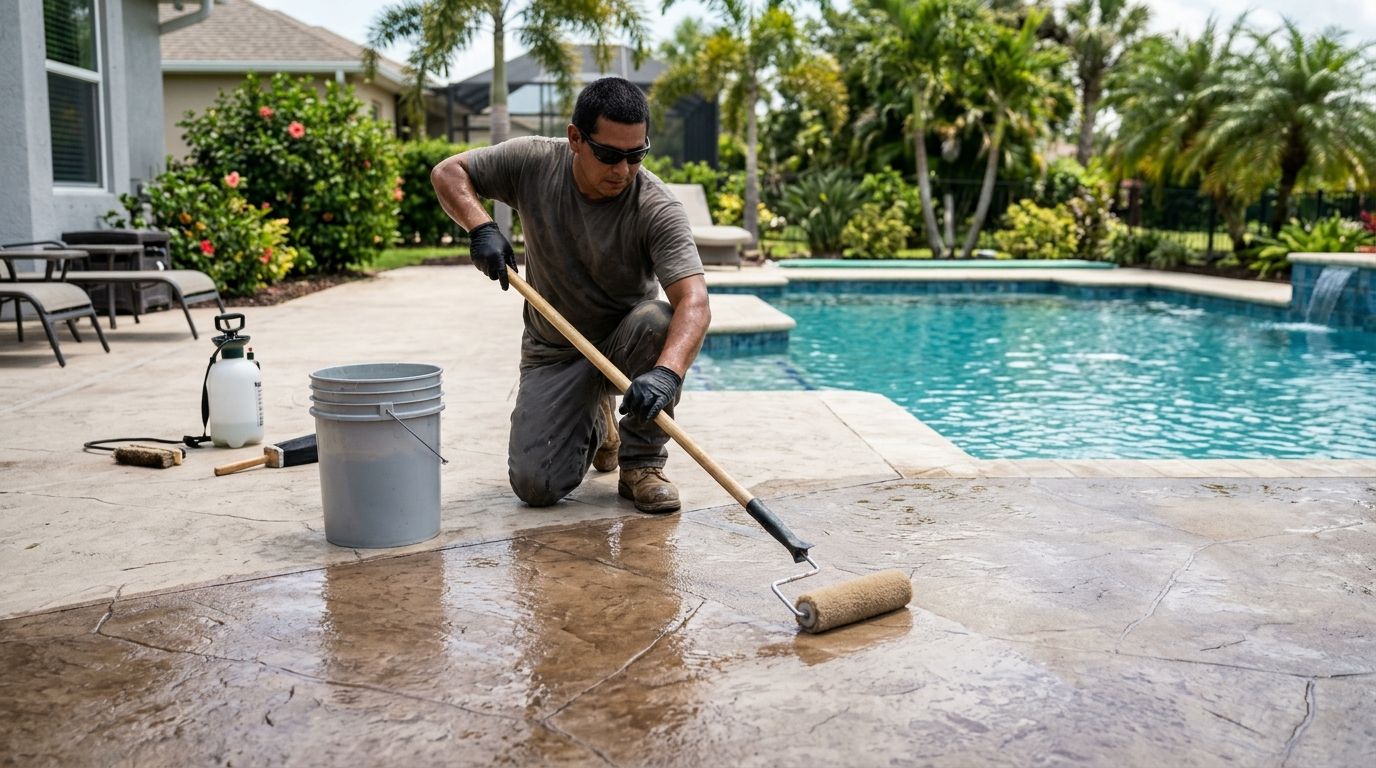
An exterior water-based acrylic forms a film on the concrete. Depending on the formulation, that film changes sheen, enhances color and protects the decorative surface from everyday exposure.
This is a practical category to compare for stamped or colored patios. Select the actual finish from a test patch, not from the words satin or gloss alone.
Water-based acrylic pros:
- Offers decorative finish choices without selecting a solvent-based formulation.
- Provides a visible finish on suitable stamped or colored concrete.
- Can be renewed when the existing film and new application are compatible.
Water-based acrylic cons:
- A film can alter traction when wet.
- Moisture or application errors can cause whitening or adhesion problems.
- An unsuitable previous coating can require removal.
For your 2026 patio project, inspect shade, sprinkler exposure and places where water remains after rain. Those conditions belong in the application discussion, not just the choice of sheen. Ask whether the manufacturer permits a traction additive and how that additive changes cleaning.
Best for: Decorative patios where appearance matters and the surface can be properly prepared.
Verdict: Buy for decorative protection; skip if drainage or coating compatibility remains unresolved.
3. Solvent-based acrylic: best for compatible acrylic renewal
An exterior solvent-based acrylic is an option for decorative concrete when the existing finish and proposed treatment are compatible. These formulations can deepen color and produce a pronounced finish, depending on the product.
This is not permission to roll a new coat over any shiny patio. Identify the old coating first. A solvent-based application over an incompatible finish can create a larger removal job.
Solvent-based acrylic pros:
- Can enhance color on suitable decorative concrete.
- Offers a renewal route for certain compatible acrylic finishes.
- Provides sheen choices within exterior-rated product lines.
Solvent-based acrylic cons:
- Requires careful solvent, vapor and ignition-source precautions.
- Can produce a slippery finish without appropriate surface planning.
- Does not solve moisture beneath an existing film.
Follow the safety data sheet as well as the application instructions. Nearby doors, enclosed areas and ignition sources matter during solvent use. If the old finish is peeling, whitening or heavily built up, diagnose the failure before adding material.
Best for: Renewing a known, compatible acrylic finish on decorative exterior concrete.
Verdict: Hold until the existing coating is identified; buy only when compatibility is established.
4. Silicate densifier: best for garage dust control
A silicate densifier reacts with components in concrete to form additional cementitious material within the surface. It belongs in the discussion when suitable bare garage concrete produces surface dust—not when you want a glossy outdoor waterproofing treatment.
Densifiers and water repellents do different jobs. A densified floor still needs a separate decision about oil exposure, stains and moisture protection.
Silicate densifier pros:
- Addresses surface dusting on suitable concrete.
- Does not rely on a decorative film.
- Suits projects where retaining a concrete appearance matters.
Silicate densifier cons:
- Does not provide the same function as a hydrophobic water repellent.
- Does not repair weak, delaminating or badly deteriorated concrete.
- Incorrect application can leave unwanted residue.
First establish why the surface is dusty. A treatment intended to harden the surface is not a repair for deep deterioration. Follow the specified coverage, working time and residue-removal procedure rather than leaving excess liquid to dry.
Best for: Suitable bare garage floors where surface dust is the main complaint.
Verdict: Buy for diagnosed dusting; skip as your stand-alone exterior water-protection choice.
5. Epoxy coating: best for an enclosed garage finish
An epoxy floor coating creates a film over prepared concrete. It is a different purchase from a penetrating driveway sealer and requires attention to surface preparation and moisture conditions.
For an enclosed garage, epoxy provides a cleanable finished surface. Ordinary epoxy can discolor or chalk under ultraviolet exposure, so do not carry an indoor garage specification onto a sunny driveway.
Epoxy coating pros:
- Creates a continuous, cleanable floor surface.
- Offers decorative finish options.
- Can provide chemical resistance specified for the particular system.
Epoxy coating cons:
- Surface contamination and moisture can cause adhesion failure.
- Smooth finishes require wet-traction planning.
- Future repair involves coating compatibility and surface preparation.
Ask for the moisture-testing method required by the coating manufacturer. A floor that feels dry at the surface does not establish that it meets the system's moisture limits. Include the doorway and sun-exposed edge when discussing the complete coating specification.
Best for: Enclosed garage floors where preparation and moisture conditions meet the coating requirements.
Verdict: Buy as a specified garage coating system; skip as a general outdoor sealer.
How these sealer types are ranked
The 2026 ranking puts bare exterior concrete first because driveways, sidewalks and patios need an outdoor treatment—not an indoor floor-coating recommendation. Decorative finishes follow, then the specialized garage options.
Green Hammer Concrete's concrete sealer guide ranks by application fit, moisture behavior, traction and maintenance. It does not rank individual containers or claim laboratory testing. Within every category, the manufacturer's technical data determines whether a particular formulation fits your slab.
Before you seal: check the slab, not just the forecast
Use these 3 checks before committing to a treatment:
- Existing finish: Identify coatings, previous water repellents, curing compounds and contamination. New material must reach or bond to the intended surface.
- Water movement: Inspect ponding, irrigation exposure, drainage and signs of moisture beneath a coating. Correct the cause rather than covering the symptom.
- Application window: Check concrete temperature, dew, humidity and the manufacturer's rain-free requirement. Air temperature alone is not enough.
New concrete also has a curing requirement. 28 days is a common reference age for many coating applications, but it is not blanket permission to seal: the chosen product's instructions and the slab's condition control. Some curing-and-sealing products follow a different schedule.
For a 2026 resealing job, photograph 2 test areas—one exposed area and one shaded or wetter area—before and after an approved test application. This is a practical comparison, not a substitute for required moisture or adhesion testing. Check appearance and traction before treating the whole slab.
Which concrete sealer should you choose?
Choose an exterior-rated silane/siloxane water repellent for bare outdoor concrete when you want a natural appearance. Choose exterior acrylic when a decorative film is part of the goal. Keep densifiers and epoxy in their specific garage roles.
For your 2026 purchase, read the technical sheet before the front label. Confirm the permitted surface, existing-coating requirements, wet-traction guidance and application conditions. If the slab needs repair, Green Hammer Concrete serves property owners in Palm Bay and Brevard County with concrete construction and repair services.
FAQ
What's the best concrete sealer for Florida driveways?
An exterior-rated penetrating silane/siloxane water repellent is a strong starting choice for bare concrete driveways when you want a natural appearance. Confirm that the formulation suits horizontal concrete and any previous treatment.
Is penetrating sealer better than acrylic for a Florida patio?
Penetrating sealer is the better fit for a natural appearance; acrylic is the better fit when you want a decorative surface film. Existing coatings, moisture and wet traction determine which option belongs on your patio.
Why did my concrete sealer turn white after rain?
Whitening can result from moisture interacting with a film-forming sealer or from application problems. Identify the coating and the moisture source before attempting removal or another coat.
Can I seal concrete that already has a coating?
You can recoat only when the existing finish and proposed product are compatible and the surface meets the preparation requirements. An unknown, peeling or contaminated coating needs assessment before another application.
How long should new concrete cure before sealing?
Follow the selected product's instructions; 28 days is a common reference age for many coating applications, not a universal rule. Curing-and-sealing products can have different application schedules, and moisture requirements still apply.
Will sealer fix cracks or standing water on my driveway?
Sealer will not repair structural movement or correct drainage. Address cracks, unstable concrete and ponding before choosing a protective treatment.
Can I use garage epoxy on my outdoor patio?
Ordinary garage epoxy is not the default choice for an exposed patio because ultraviolet exposure can discolor or chalk it. Use a system explicitly specified for the exterior conditions and substrate.
One last thing
Water beading is not proof that a slab is ready for another coat. Beading can indicate an existing water-repellent treatment—the very condition that prevents a new penetrating product from entering the concrete. Identify what is already there before deciding that more sealer is the answer.