Best overall: integrally colored, broom-finished concrete. Best for patterned patios: stamped concrete. Best for refreshing a sound existing slab: stained concrete. This 2026 guide compares the best decorative concrete finishes Brevard County homeowners can choose by texture, upkeep, drainage and repair needs.
- For best decorative concrete finishes Brevard County choices, integrally colored broom finishes lead for everyday patios.
- Stamped concrete suits patterned patios; exposed aggregate suits homeowners who prefer visible stone and pronounced texture.
- Stained concrete changes a sound slab’s appearance without hiding cracks or correcting drainage.
- Green Hammer Concrete provides patio construction and repair for Palm Bay and Brevard County property owners.
Why this matters
A patio finish has to work when the slab is wet, not just when the sample board is dry. Texture, sealer and drainage all affect how the surface performs underfoot.
Green Hammer Concrete is best for Palm Bay and Brevard County property owners seeking concrete patio construction or repair. Start with the slab’s condition and intended use before choosing its appearance. You can discuss that construction or repair scope with Green Hammer Concrete.
Decorative work cannot substitute for a stable base, suitable joints or a drainage plan. A pattern can make a patio attractive while leaving the underlying problem untouched.
What makes the best decorative concrete finish?
Use these criteria to compare finishes for a 2026 patio project:
- Wet traction: Evaluate the finished surface, including its sealer, rather than judging texture alone.
- Barefoot comfort: Match the texture to how you use the patio. Pronounced aggregate and deep patterns deserve a physical sample.
- Drainage: Confirm where water leaves the patio and whether thresholds, landscaping or neighboring surfaces interrupt that route.
- Maintenance: Ask what cleaning and recoating the proposed finish requires. Do not assume every decorative surface follows the same schedule.
- Repair appearance: Discuss how patches, cracks and future extensions will look beside the original work.
- Existing-slab suitability: Separate a surface treatment from structural repair. Color does not correct settlement or displaced cracks.
Decorative patio finishes at a glance
These options are not mutually exclusive: integral color can accompany stamping, and staining can accompany other textures. The ranking compares practical finish packages rather than treating every technique as a separate material.
| Rank and finish | Best for | Standout feature | Key limitation |
|---|---|---|---|
| 1. Integrally colored broom finish | Everyday dining and sitting areas | Color through the concrete with a directional surface texture | Limited pattern detail; patches can remain visible |
| 2. Stamped concrete | Patios with a defined pattern | Imprinted stone, slate or other repeating designs | Pattern, joints and sealer need coordinated planning |
| 3. Exposed aggregate | A visibly textured stone surface | Decorative aggregate forms the wearing surface | Roughness varies and can affect barefoot comfort |
| 4. Stained concrete | Updating a sound existing slab | Changes color without replacing the slab | Existing marks and repairs can remain visible |
| 5. Decorative resurfacing overlay | Renewing a suitable slab’s surface | Adds a new decorative wearing layer | Depends on preparation and the underlying slab |
1. Colored broom finish: best for everyday patios
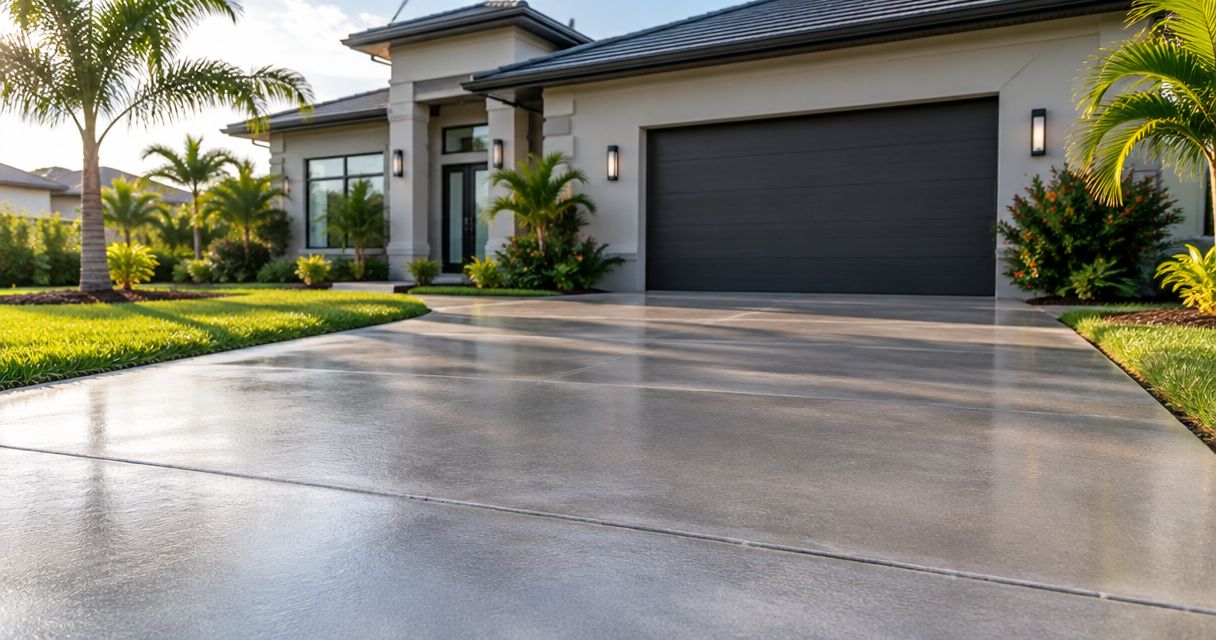
Integrally colored concrete contains pigment mixed into the concrete before placement. Broom finishing adds directional texture to the surface, giving you a decorative result without a stamped pattern.
This is the default recommendation for a patio used for meals, chairs and ordinary foot traffic. Keep the texture deliberate rather than assuming a deeper broom mark is always better.
Colored broom finish pros:
- Integral color extends through the concrete rather than forming only a surface-colored film.
- Directional texture provides a straightforward alternative to patterned relief.
- Simple appearance works without matching a repeating stone pattern.
Colored broom finish cons:
- Color can vary with placement, finishing and curing conditions.
- Repairs and later additions can differ visibly from the original slab.
- Heavy broom texture can feel abrasive and complicate cleaning.
Best for: Homeowners who want color and a practical walking surface without making a pattern the patio’s main feature.
Ask for a sample showing the proposed texture and any sealer. A smooth color chip answers the color question, not the underfoot question.
Verdict: Buy for a new everyday patio when simple texture matters more than elaborate pattern.
2. Stamped concrete: best for a defined patio pattern
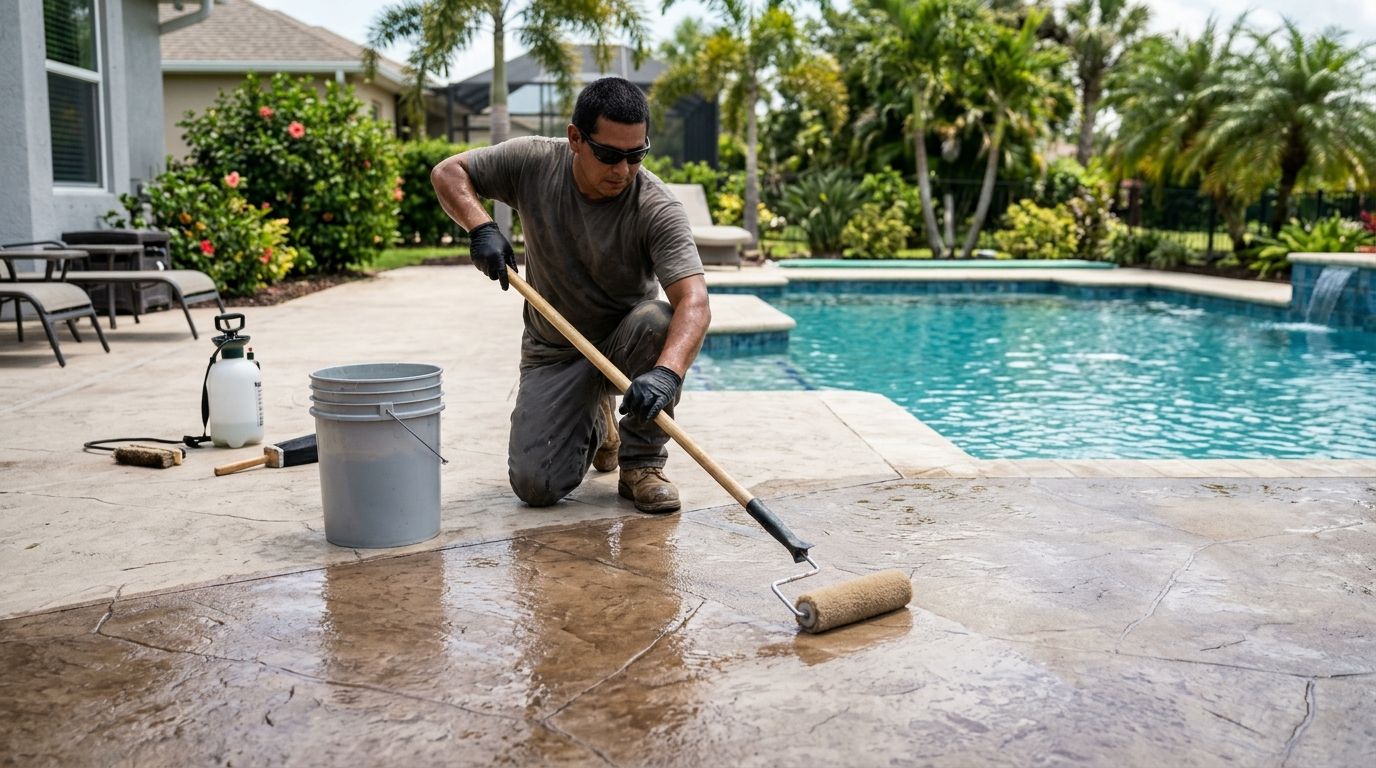
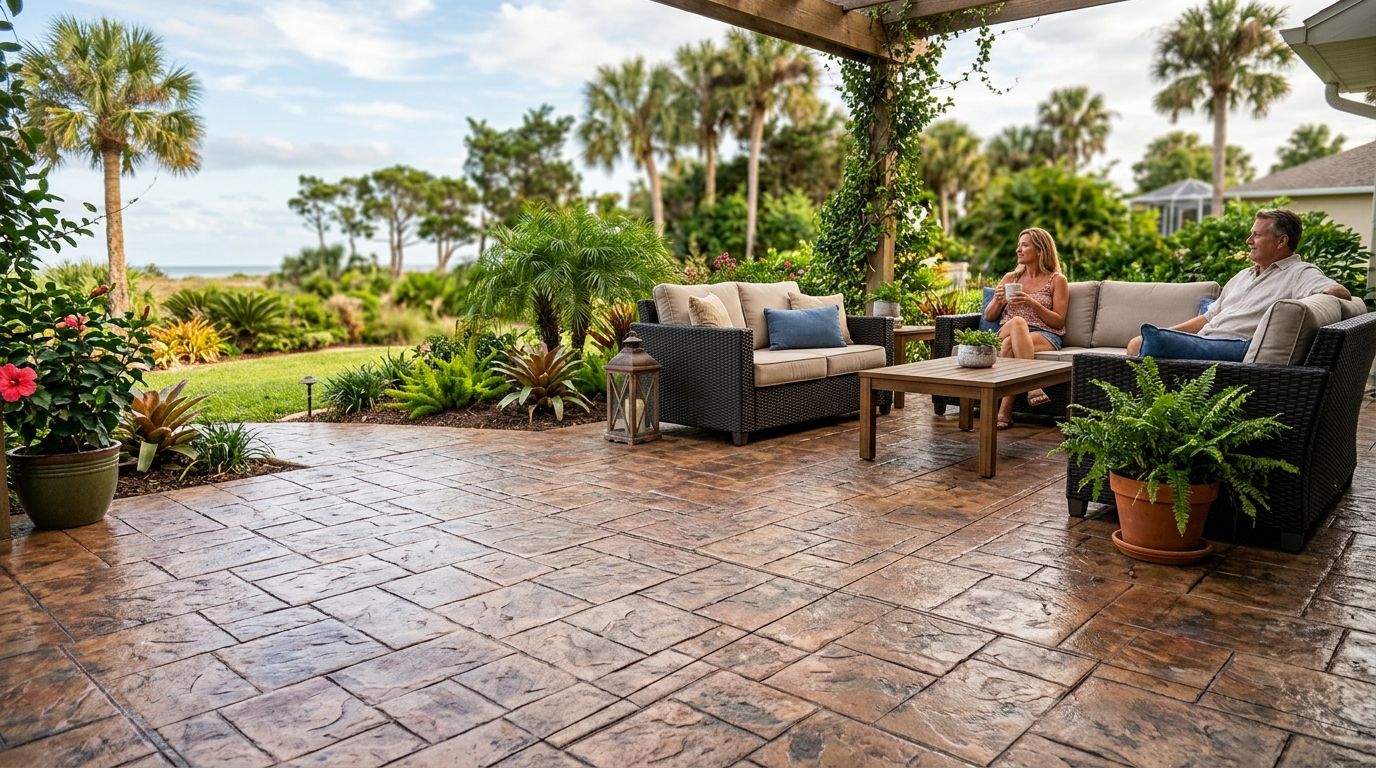
Stamped concrete receives an imprinted pattern while the surface is workable. Color treatments and finishing details determine whether the result reads as stone, slate or another decorative design.
Choose the pattern alongside the joint layout, not after it. Concrete still needs planned joints even when the surface imitates individual paving units.
Stamped concrete pros:
- Provides a patterned surface within a poured concrete patio.
- Offers deliberate borders and changes in pattern direction.
- Combines color and relief for a more detailed appearance.
Stamped concrete cons:
- Deep relief can affect chair placement and make cleaning more involved.
- Repairs can interrupt both the pattern and color.
- A film-forming sealer can change wet traction and requires appropriate selection.
Best for: Homeowners who want the patio’s pattern to be a visible part of the backyard design.
Check an actual textured sample, including the intended sealer. Ask how the pattern terminates at doors, borders and irregular edges; those transitions deserve as much attention as the center.
Verdict: Buy for pattern-led designs; skip if you want the simplest possible surface.
3. Exposed aggregate: best for visible stone texture
Exposed aggregate removes surface paste to reveal selected aggregate near the face of the concrete. The stone’s size, shape and exposure determine both the appearance and the feel.
Do not choose this finish from a distant photograph. A surface that looks gently textured in a picture can feel quite different under bare feet.
Exposed aggregate pros:
- Makes the aggregate itself the decorative feature.
- Provides pronounced texture without an imprinted stone pattern.
- Allows a different appearance through aggregate selection.
Exposed aggregate cons:
- Rough or deeply exposed aggregate can be uncomfortable barefoot.
- Recesses collect dirt and require attentive cleaning.
- Repairs need compatible aggregate and finishing to approach the original appearance.
Best for: Homeowners who prefer a stone-textured patio and accept the cleaning and comfort trade-offs.
Request a physical sample with the proposed aggregate and exposure. Rounded stone, angular stone and different exposure depths should not be treated as interchangeable finishes.
Verdict: Buy after checking the sample by hand and underfoot; hold if barefoot comfort is your priority.
4. Stained concrete: best for updating a sound slab
Concrete stain changes the appearance of an existing concrete surface. Acid-reactive stains and other concrete coloring systems produce different effects, so the specified product matters more than the general word stain.
Staining is an appearance treatment, not a way to level a patio or repair a moving crack. Existing patches, contamination and earlier coatings influence the result.
Stained concrete pros:
- Changes color while retaining a suitable existing slab.
- Can preserve the concrete’s visible texture and character.
- Supports a decorative update without introducing stamped relief.
Stained concrete cons:
- Cracks, repairs and surface differences can remain visible.
- Existing coatings or contamination can interfere with preparation and coloring.
- The completed surface’s traction depends partly on its protective treatment.
Best for: Homeowners whose slab is sound and drains properly but needs an appearance change.
Ask for a test area on the actual patio. A separate sample cannot reproduce every stain, patch or finishing difference already present in your concrete.
Verdict: Buy for appearance-only improvements; skip as a substitute for slab repair.
5. Decorative overlay: best for suitable surface renewal
A decorative resurfacing overlay adds a bonded layer over prepared concrete. Depending on the specified system, that layer can receive texture, color or a decorative pattern.
The important word is bonded. Surface preparation, moisture conditions and compatibility with the existing slab are central to the result.
Decorative overlay pros:
- Renews the visible surface without automatically replacing the entire slab.
- Offers decorative treatments beyond the existing finish.
- Can address suitable surface defects as part of a specified preparation system.
Decorative overlay cons:
- Does not eliminate underlying slab movement.
- Requires suitable preparation and a compatible substrate.
- Added material must be considered at thresholds, drains and adjoining surfaces.
Best for: Homeowners with a suitable existing slab whose surface needs more change than staining provides.
Have the slab evaluated before choosing the overlay design. Widespread deterioration, displacement or unresolved drainage changes the project from decoration to repair or replacement planning.
Verdict: Hold until the existing slab and proposed overlay system have been evaluated together.
Check drainage before choosing the finish
For a 2026 patio project, ask the contractor to explain the water route in plain terms: where rain lands, which direction the slab falls and where runoff goes. Neither stamping nor a rougher texture removes standing water caused by unsuitable elevations.
As a slope illustration, a fall of 1/4 inch per foot equals 1 inch over 4 feet. That example explains the geometry; it is not a universal specification. Door elevations, accessibility requirements, site conditions and applicable rules determine the project’s design.
Use this sequence before approving decorative work:
- Inspect the slab: Identify displacement, deteriorated areas, previous patches and existing coatings.
- Trace the water: Check the proposed route to the discharge point, including nearby swales and landscaping.
- Choose the finish: Match texture, color and protective treatment to the patio’s use.
- Approve the sample: Review the finished texture and appearance before the main work begins.
Take photographs of standing water and damaged areas before your project discussion. Green Hammer Concrete provides both patio construction and repair, so distinguish an appearance request from a repair problem when describing the work.
How the finishes rank
The 2026 ranking prioritizes everyday use, wet-surface considerations, cleaning, repair appearance and suitability for the existing concrete. It is a decision guide, not a claim that every listed finish has been installed or tested by the same contractor.
Colored broom-finished concrete takes the default position because it adds color and texture without requiring patterned relief. Stamping wins the pattern slot; staining wins the appearance-only update slot. Overlays remain conditional on the slab beneath them.
Which patio finish should you choose?
Choose integrally colored, broom-finished concrete for a new patio unless you have a clear reason to prefer another surface. Choose stamped concrete when a specific pattern matters, or exposed aggregate when visible stone texture matters more than a smoother barefoot feel.
For an existing patio, reverse the decision order. Establish whether the slab is suitable to keep before comparing stain and overlay samples. A decorative treatment is the wrong next step when settlement or drainage remains unresolved.
For your 2026 project discussion with Green Hammer Concrete, bring the patio’s intended use, photographs of problem areas and examples of textures you like. Ask which finishes are offered for your project rather than assuming every decorative system is included.
FAQ
What are the best decorative concrete finishes for Brevard County patios?
Integrally colored broom finishes are the default recommendation for everyday patios. Stamped concrete suits pattern-led designs, exposed aggregate provides visible stone texture, and staining suits appearance updates on sound existing slabs.
Is stamped concrete better than broom-finished concrete for a patio?
Stamped concrete is better when a defined pattern is your priority; broom-finished concrete is better when you want straightforward texture without patterned relief. Compare actual samples with the intended sealer before choosing.
Can I stain my existing concrete patio instead of replacing it?
You can stain a suitable existing patio when the goal is an appearance change. Stain does not correct settlement, displaced cracks or drainage, and existing marks can remain visible.
Which decorative concrete finish feels best under bare feet?
Choose barefoot comfort from a physical sample rather than the finish name. Heavy broom marks, deep stamped relief and pronounced exposed aggregate each create different contact surfaces.
Will a decorative overlay stop patio cracks from coming back?
A decorative overlay does not eliminate movement in the underlying slab. The existing cracks, substrate condition and proposed system need evaluation before resurfacing.
Does sealing decorative concrete make it slippery?
Sealer can change the traction of decorative concrete, particularly when wet. Evaluate the specified sealer and texture together rather than assuming a rough-looking surface is enough.
What should I ask a patio contractor before choosing a finish in 2026?
Ask about slab condition, drainage, joints, sample approval and maintenance for the specified finish. Also confirm which decorative systems the contractor offers for your project.
One last thing
The sample should show the finished system, not just the color. A dry, unsealed sample does not answer how the proposed sealed patio looks or feels when wet. Ask to review texture and protective treatment together before approving the work.