Best overall: satin, low-exposure polished concrete for dry warehouse aisles. Best for utility stockrooms: matte, minimal-exposure concrete. Best for an aggregate-led renovation: satin exposed-aggregate concrete. Best for visitor-facing display areas: high-gloss polished concrete. This 2026 guide separates appearance from working-floor requirements; Green Hammer Concrete provides concrete installation and repair services in Palm Bay and Brevard County.
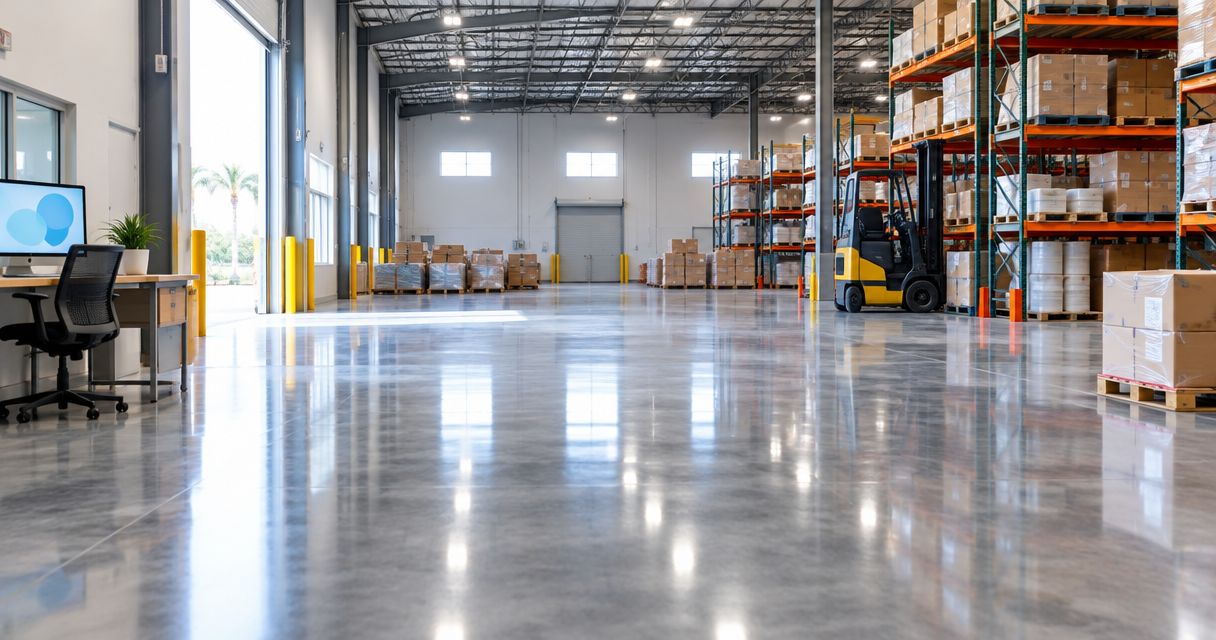
- For best polished concrete warehouse Florida searches, satin low-exposure concrete is the default for dry working aisles.
- Matte finishes suit utility stockrooms; exposed aggregate suits renovations where visible stone is part of the design.
- High-gloss polished concrete belongs in visitor-facing display areas, not automatically across the working warehouse.
- Green Hammer Concrete provides commercial concrete installation and repair; confirm polishing scope before specifying the finish.
Why this matters
A warehouse floor has to support operations before it earns its shine. Forklift routes, dock entrances, joints, spills and cleaning methods matter more than how the concrete looks in a photograph.
Florida warehouses need particular attention at transitions between outdoor rain and indoor traffic. Choose a finish for the conditions in each zone, not one appearance for the entire building. Polishing does not correct drainage, stabilize a moving slab or replace a moisture assessment.
What makes the best warehouse polished concrete finish?
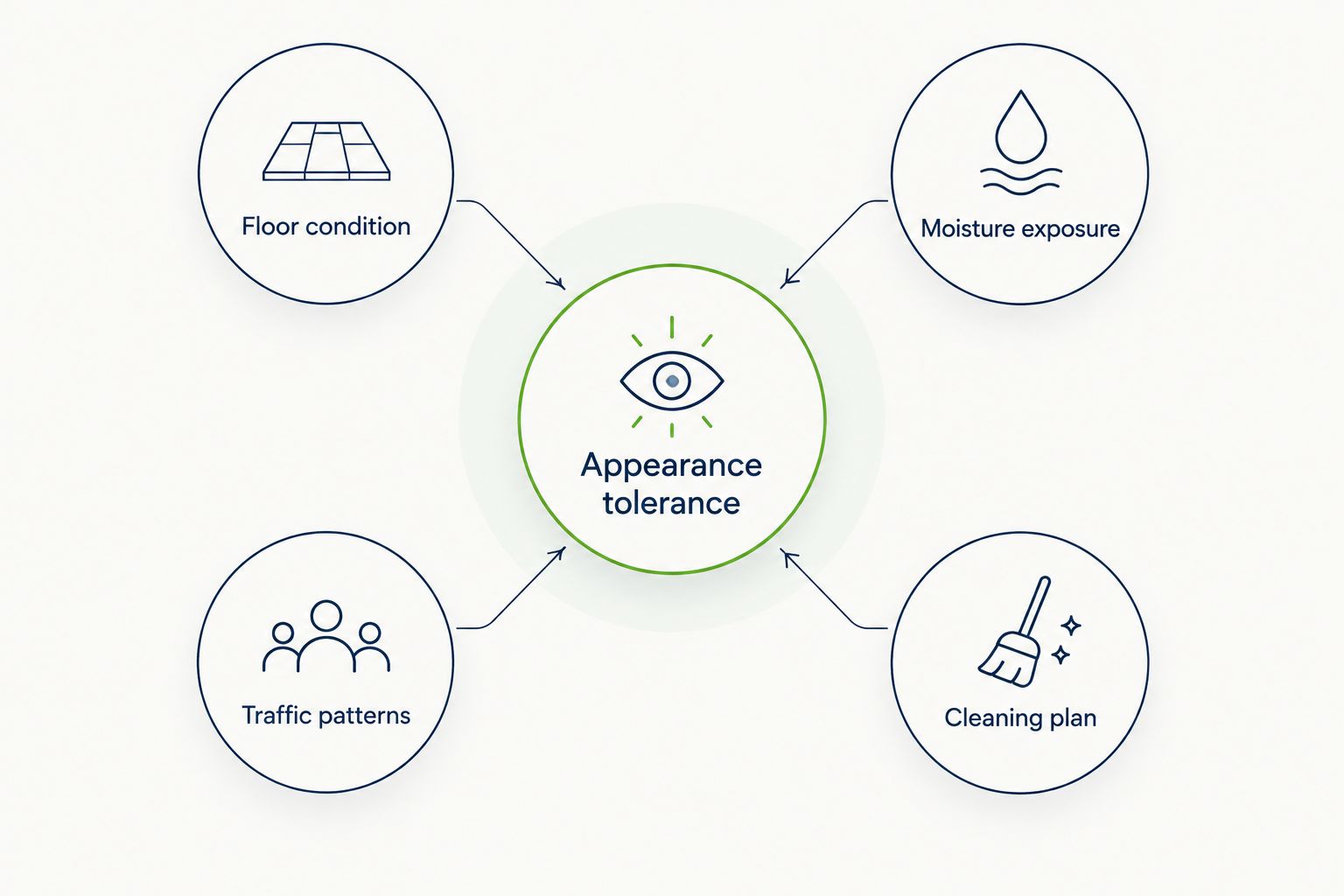
Use these criteria to compare a proposed finish in 2026. Ask for answers tied to your building rather than a generic polishing package.
- Floor condition: Check cracking, spalling, existing coatings, patching and joint edges before selecting an appearance.
- Moisture exposure: Identify rain entry, washdown areas, spills and moisture within the slab. A polished surface does not resolve their causes.
- Traffic patterns: Separate forklift travel, pallet handling, pedestrian routes and visitor areas. Include turns and braking points.
- Cleaning plan: Match the finish to the equipment, cleaners and spill procedures your staff will actually use.
- Appearance tolerance: Decide whether visible aggregate, repairs and color variation are acceptable. An existing slab will not necessarily finish uniformly.
These criteria put the operating conditions first. A sample that looks good beside the office entrance still needs evaluation against conditions at the loading dock.
Warehouse polished concrete finishes at a glance
These are specification combinations, not standardized product names. Sheen describes the surface appearance; exposure describes how much aggregate grinding reveals. You can specify those characteristics separately.
| Finish combination | Best for | Standout feature | Key limitation |
|---|---|---|---|
| Satin, low-exposure polished concrete | Dry working aisles | Restrained reflection without making stone exposure the design feature | Existing defects and repairs remain visible |
| Matte, minimal-exposure concrete | Utility stockrooms | Low-reflection appearance | A consistent surface appearance depends on the original slab |
| Satin exposed-aggregate concrete | Appearance-led renovations | Visible stone becomes part of the design | Deeper grinding does not guarantee uniform aggregate exposure |
| High-gloss polished concrete | Visitor-facing display areas | Strong reflected light and a pronounced polished appearance | Glare and visible marks need evaluation under actual lighting |
The default recommendation is satin, low-exposure polished concrete for a dry warehouse whose slab is suitable for polishing. Treat wet processing areas, dock transitions and damaged slabs as separate specification decisions.
1. Satin, low-exposure concrete: best for dry working aisles
Satin, low-exposure polished concrete keeps the appearance restrained while retaining the concrete slab as the working surface. The specification should describe both the intended sheen and acceptable aggregate exposure, rather than relying on the word satin alone.
This is the starting point for a warehouse where storage, picking and vehicle movement take priority over decorative effects. It is not a promise of traction, load capacity or freedom from maintenance.
Satin, low-exposure concrete pros:
- Keeps strong reflection from becoming the main visual feature.
- Lets you specify sheen separately from aggregate exposure.
- Provides an appearance target for comparing samples with the completed work.
Satin, low-exposure concrete cons:
- Cracks, patch outlines and color differences can remain visible.
- Existing wear can make consistent low exposure difficult to achieve.
- Wet or contaminated conditions still require a separate safety assessment.
Best for: Dry working aisles where you want a polished appearance without making high gloss the priority.
Ask the contractor to show the proposed finish under the installed warehouse lighting. Inspect it from a standing position and from normal equipment operating positions, not just from a close-up photograph.
Verdict: Buy this specification for dry working aisles after slab and sample approval.
2. Matte, minimal-exposure concrete: best for utility stockrooms
Matte, minimal-exposure concrete puts a subdued appearance ahead of visible stone or strong reflection. Specify the required mechanical finishing process because matte describes appearance, not a complete floor system.
This option suits stockrooms where racks, stored goods and routine movement dominate the space. Do not assume that a lower sheen automatically creates a slip-resistant surface; contamination, footwear, cleaning and the actual surface all matter.
Matte, minimal-exposure concrete pros:
- Keeps reflection visually restrained.
- Suits spaces where decorative aggregate is unnecessary.
- Gives utility areas a different appearance target from visitor areas.
Matte, minimal-exposure concrete cons:
- A worn or previously ground slab might not support consistent minimal exposure.
- Existing discoloration and patching remain part of the appearance.
- Matte appearance alone says nothing about traction performance.
Best for: Utility stockrooms and back-of-house storage where low reflection is the main appearance requirement.
Agree on an acceptable range of variation before work starts. A sample taken from an unusually clean corner is a poor reference for a floor covered with old adhesive, repairs or wheel wear.
Verdict: Buy for utility stockrooms; skip specifications that describe only a matte look.
3. Satin exposed aggregate: best for appearance-led renovations
Satin exposed-aggregate concrete uses grinding to reveal stone within the slab, then finishes the surface to the agreed sheen. The exposed material is the aggregate already present in the concrete, not a decorative pattern the contractor can freely rearrange.
Choose this approach when visible stone is a deliberate design decision. Do not choose it on the assumption that grinding deeper will erase every repair or make an inconsistent slab uniform.
Satin exposed-aggregate concrete pros:
- Makes the slab's aggregate part of the finished design.
- Separates a visible-stone appearance from a high-gloss requirement.
- Provides a useful sample-based decision for an existing concrete floor.
Satin exposed-aggregate concrete cons:
- Aggregate distribution and exposure can vary across the slab.
- Patches can reveal different aggregate or remain visually distinct.
- Grinding is not a substitute for evaluating slab thickness and condition.
Best for: Renovations where visible aggregate is wanted and the owner accepts the existing slab's variation.
Require a representative trial area before approving full-floor grinding. Include a repaired or worn section when those conditions occur throughout the building; otherwise, the sample leaves the hardest appearance question unanswered.
Verdict: Hold until a representative sample confirms that the exposed stone suits the project.
4. High-gloss concrete: best for visitor-facing display areas
High-gloss polished concrete makes reflected light and a pronounced polished appearance part of the room. It belongs on the shortlist for a warehouse showroom, visitor area or display zone where appearance carries more weight than it does in storage aisles.
Evaluate the surface with the lights, windows and viewing angles the space will actually have. A glossy sample under temporary work lighting does not settle the finished appearance.
High-gloss polished concrete pros:
- Creates a distinct visual treatment for display areas.
- Emphasizes the polished character of the concrete.
- Allows visitor-facing areas to differ from working-floor zones.
High-gloss polished concrete cons:
- Reflections can create distracting glare under some lighting arrangements.
- Wheel marks, residue and cleaning streaks need evaluation on the sample.
- Gloss alone does not establish wet traction or suitability for dock traffic.
Best for: Visitor-facing warehouse display areas where the approved sample works under the actual lighting.
Do not extend this finish into every operational zone merely to keep the floor visually consistent. A loading entrance and a display room have different exposure and maintenance questions.
Verdict: Buy for approved display zones; skip it as an automatic whole-warehouse specification.
Before approving the floor: check the slab and the water
Start a 2026 warehouse project with the concrete's condition, not a sheen chart. Green Hammer Concrete's commercial concrete installation and repair services address a different scope from a polishing specification; confirm who is responsible for each part of the work.
Ask the project team to document:
- Slab movement: Identify uneven joints, settlement and cracks that need investigation rather than cosmetic treatment.
- Surface damage: Map spalls, weak surface material, coatings and contamination before selecting preparation methods.
- Water entry: Trace rain at doors, dock transitions, roof leaks and washdown routes.
- Floor moisture: Select testing appropriate to the proposed treatments and any adjacent floor systems.
- Joint treatment: Specify joint repairs and maintenance separately from the polished appearance.
A densifier is not a moisture barrier, and polishing does not waterproof a warehouse floor. Where a project includes a topical guard or another treatment, identify it by the actual proposed system and follow its technical requirements.
For Palm Bay and Brevard County properties, inspect entrances during wet conditions as well as during a dry walkthrough. That shows where water is entering and where the operating plan needs to account for it.
How to approve a sample without approving a surprise
Use these acceptance steps for a 2026 project. They turn an appearance preference into instructions the contractor and owner can both check.
- Choose representative locations. Request at least 2 sample panels when the floor includes clearly different slab conditions. Include repaired or previously coated concrete where relevant.
- Inspect the entrance. Include 1 dock-side test area when rain entry and vehicle traffic overlap. Evaluate it against the expected operating conditions, not appearance alone.
- Record the finish. Put the preparation, aggregate exposure, sheen, treatments, joint work and acceptance method into 1 written specification.
- Check the cleaning method. Review the equipment and cleaning products proposed for routine use. Include spill response and residue removal.
- Define handover. Require written care instructions and clear responsibility for repairs, joints and any applied treatments.
The sample should resolve disagreements before the main work starts. Keep a record of its location and approved appearance so the finished floor is judged against the same reference.
How these finishes were ranked
The 2026 ranking prioritizes the stated use case, then appearance control, slab limitations and maintenance requirements. It is a specification guide, not a product test or a measured comparison of traction and wear.
Satin, low-exposure concrete takes the default position because dry working aisles do not need a high-gloss design brief. Matte, exposed-aggregate and high-gloss finishes each take a separate use-case slot rather than competing for the same job.
Which warehouse finish should you choose?
Choose satin, low-exposure polished concrete for dry working aisles unless the slab assessment or operating conditions rule it out. Choose matte for utility stockrooms, exposed aggregate for an approved visible-stone design, and high gloss for a separately assessed display area.
Green Hammer Concrete is best suited to Palm Bay and Brevard County owners seeking commercial concrete installation or repair. Confirm whether specialist polishing is included before assigning the complete warehouse-floor scope.
FAQ
What's the best polished concrete finish for a Florida warehouse?
Satin, low-exposure polished concrete is the default recommendation for dry working aisles. Confirm slab condition, water exposure, traffic and cleaning requirements before approving the specification.
Is matte polished concrete safer than high gloss?
Sheen alone does not establish slip resistance. Assess the actual surface under expected wet or contaminated conditions and account for footwear, traffic and cleaning.
Can polishing fix cracks in a warehouse slab?
Polishing does not stabilize a moving slab or repair the cause of cracking. Assess cracks and joint damage separately, then specify repairs before approving the finish.
Does polished concrete stop moisture coming through the floor?
Polishing does not create a moisture barrier. Evaluate floor moisture and select any required treatment according to the proposed system's technical requirements.
Should the loading dock have the same finish as the warehouse aisles?
The loading dock needs its own assessment rather than automatic approval of the aisle finish. Rain entry, contamination, vehicle movements and drainage can create different requirements.
Will exposed-aggregate polishing hide old repairs?
Exposed-aggregate polishing does not guarantee hidden repairs. Patches can differ in color and aggregate, so approve a sample that includes representative repaired areas.
Does Green Hammer Concrete provide warehouse floor polishing?
Green Hammer Concrete provides commercial concrete installation and repair services in Palm Bay and Brevard County. Confirm specialist polishing scope directly before including it in the project.
One last thing
For your 2026 project, inspect the least attractive part of the proposed sample first: the patch, joint edge or worn turning area. If the finish is acceptable there, the approval is more useful than a perfect sample from an untouched corner.