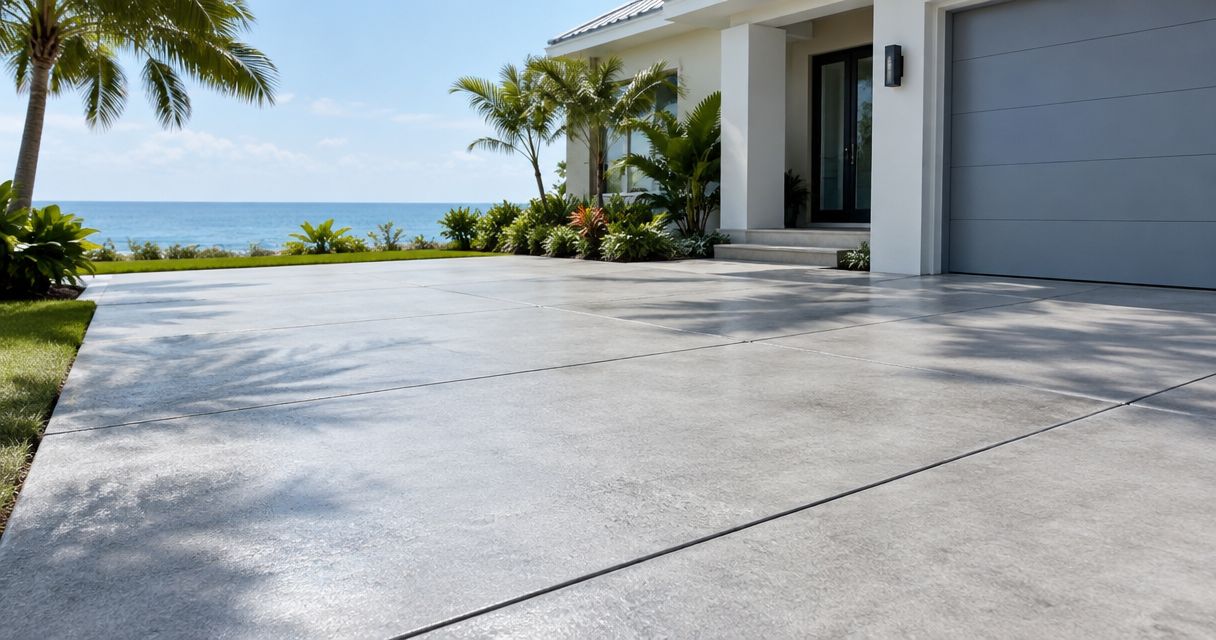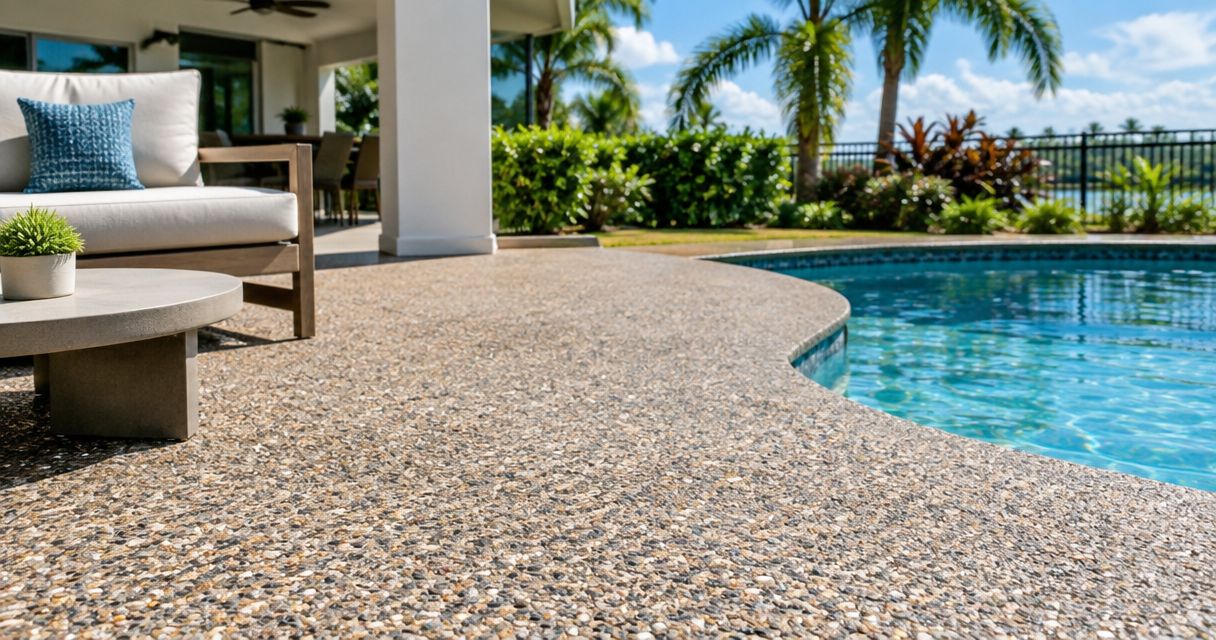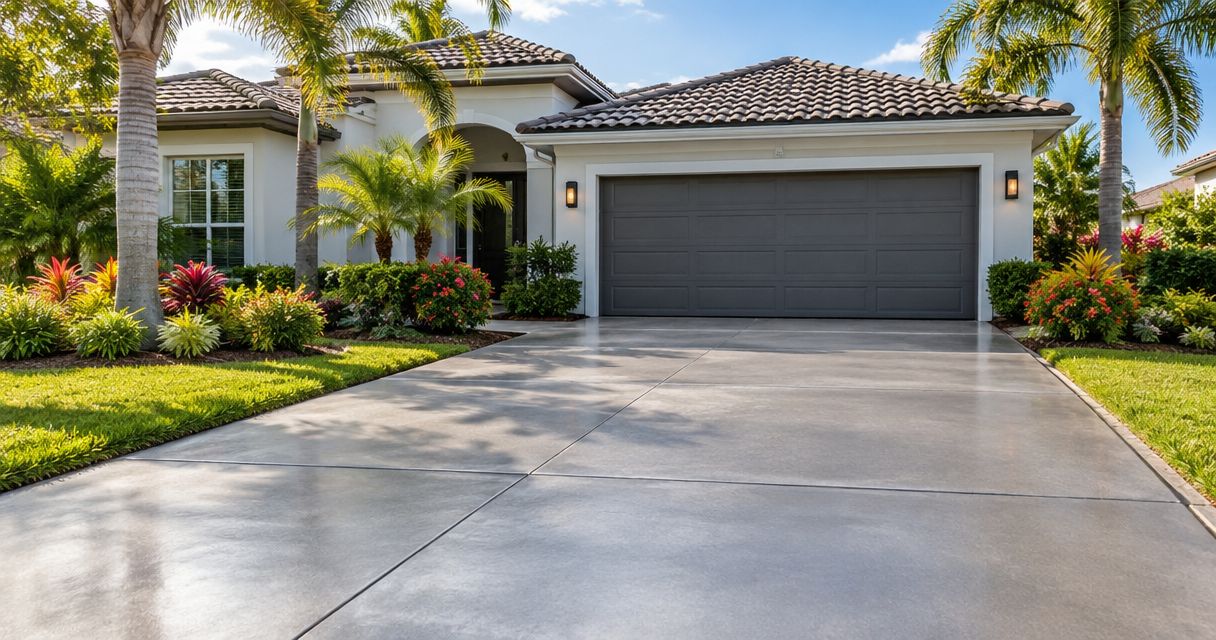
Best overall: light gray. Best for warm-toned homes: sand beige. Best plain option: natural gray. The best concrete driveway colors Florida homeowners should compare in 2026 also include greige, muted terracotta, and charcoal accents; Green Hammer Concrete provides driveway construction and repair for residential and commercial property owners in Palm Bay and Brevard County.
- The best concrete driveway colors Florida homeowners should shortlist start with light gray, sand beige, and natural gray.
- Light gray is the default recommendation for a restrained driveway color that works with varied exterior materials.
- Choose sand beige for warm exteriors, greige for mixed palettes, and muted terracotta for a deliberate clay-colored look.
- Compare physical samples outdoors; driveway finishes, sealers, and wet conditions change how the same color looks.
Why this matters
A driveway occupies a large, uninterrupted part of your property's frontage. A color that looks subtle on a small sample can become the dominant feature beside your house.
Florida sun and rain also make color selection more than a decorating exercise. Lighter surfaces generally absorb less solar energy than darker surfaces under comparable conditions, but color alone does not establish a driveway's temperature or traction.
Choose the color and the surface finish together. The best concrete driveway finishes for Florida homes guide addresses a separate decision: the texture you walk and drive on. A good-looking color does not compensate for poor drainage, inadequate preparation, or an unsuitable surface treatment.
What makes the best concrete driveway color?
Use these criteria before choosing from a color chart:
- Exterior compatibility: Compare the sample with your roof, walls, garage door, and permanent masonry. Start with materials you are not replacing.
- Sun exposure: Account for direct afternoon sun and shade. Do not treat a color name as a surface-temperature rating.
- Visible staining: Consider tire marks, soil, leaves, irrigation deposits, and vehicle leaks. No color makes a driveway maintenance-free.
- Repair appearance: Patches and replacement sections can differ from surrounding concrete. Decorative color does not guarantee an invisible repair.
- Finish and sealer: Texture, sheen, and surface treatments affect perceived color. Approve the intended combination, not pigment alone.
- Application method: Natural concrete, integral color, stains, and coatings are different systems. Confirm which one the proposal includes.
These criteria make light gray the default recommendation in this 2026 guide, not a universal winner. A warm exterior or an existing slab can change the right choice.
Concrete driveway colors at a glance
The names below describe color families, not standardized manufacturer shades. Actual samples control the decision.
| Rank and color | Best for | Standout quality | Key limitation |
|---|---|---|---|
| 1. Light gray | A restrained whole-driveway color | Keeps the driveway visually neutral | Dark deposits and tire marks remain visible |
| 2. Sand beige | Warm stucco and earth-toned masonry | Connects the driveway with warm exterior materials | A yellow undertone can clash with cool gray walls |
| 3. Natural gray | A straightforward concrete appearance | Uses concrete's own color rather than a decorative color treatment | Natural variation is part of the result |
| 4. Greige | Mixed warm and cool exterior palettes | Sits between gray and beige | Undertones are difficult to judge from a screen |
| 5. Muted terracotta | A deliberate clay-colored exterior scheme | Adds a distinct warm color | Stronger color limits future exterior combinations |
| 6. Charcoal accents | Borders and limited contrasting details | Defines edges without darkening the entire driveway | Dark accents can emphasize layout and repair differences |
1. Light gray: best driveway color for a neutral exterior
Light gray gives you a restrained driveway without making the surface bright white. It is the first color to compare when your house combines several materials and you do not want another strong color competing with them.
This recommendation means a light gray color family, not a promise that ordinary uncolored concrete will cure to a particular shade. Establish the appearance through an appropriate sample.
Light gray pros:
- Provides a neutral starting point beside varied exterior colors.
- Avoids the stronger visual presence of charcoal or terracotta.
- Generally absorbs less solar energy than a comparable darker surface.
Light gray cons:
- Dark tire deposits and oil stains can remain conspicuous.
- Patches and separate placements can differ in appearance.
Best for: Homeowners who want the driveway to support the house rather than become its main visual feature.
Verdict: Choose light gray as the default, then check its undertone against your exterior.
2. Sand beige: best driveway color for warm-toned homes
Sand beige belongs on your shortlist when the house has cream walls, warm masonry, or an earth-toned roof. Compare the sample against those fixed materials rather than choosing beige simply because the property is in Florida.
Beige covers a wide range. A pale sandy shade and a pronounced yellow-brown shade create different results, especially across a broad driveway.
Sand beige pros:
- Connects visually with warm stucco and earth-toned masonry.
- Offers a colored alternative to a gray driveway.
- Supports a restrained palette when the sample has a muted undertone.
Sand beige cons:
- Yellow or pink undertones can conflict with cool exterior paint.
- Dark organic staining and vehicle leaks still require cleaning.
Best for: Homes whose permanent exterior materials already lean warm.
Verdict: Choose sand beige when it repeats an existing warm tone, not when it introduces an unrelated one.
3. Natural gray: best driveway color for a plain concrete finish
Natural gray means the concrete's own appearance without a decorative coloring treatment. Choose it because you want plain concrete, not because you expect a perfectly uniform gray surface.
Cement, aggregates, placement, finishing, curing, and moisture can affect the final appearance. A neighboring driveway is a useful reference for the general look, but it is not an exact color specification for your project.
Natural gray pros:
- Keeps the specification focused on a conventional concrete appearance.
- Does not require selecting a decorative pigment or stain color.
- Works with a straightforward textured driveway design.
Natural gray cons:
- Mottling and shade differences can remain visible.
- Repairs and additions do not necessarily match the original slab.
Best for: Property owners who accept natural variation and want a straightforward driveway.
Verdict: Choose natural gray if plain concrete is the intended finish; skip it if exact color uniformity is essential.
4. Greige: best driveway color for mixed exterior palettes
Greige combines gray and beige. It deserves a sample when the house mixes cool wall paint with warmer stone, brick, or roofing.
The benefit is a middle ground, not an automatic match. Some greige samples read more brown; others look distinctly gray once placed outside.
Greige pros:
- Provides an option between gray and beige.
- Lets you compare warm and cool undertones without choosing a strong color.
- Suits a restrained exterior scheme when its undertone matches the permanent materials.
Greige cons:
- Screen images are unreliable for judging subtle undertones.
- A mismatched sample can look muddy beside the house.
Best for: Homes with both warm and cool fixed materials.
Verdict: Choose greige only after an outdoor sample resolves the undertone question.
5. Muted terracotta: best driveway color for a clay-toned scheme
Muted terracotta makes the driveway an intentional part of a warm exterior palette. Compare it when clay-colored roofing or other reddish-brown materials already establish that direction.
Keep the sample beside the roof and walls before approving it. A small terracotta chip can look restrained while the same hue across a driveway becomes much more prominent.
Muted terracotta pros:
- Repeats clay and reddish-brown tones already present on the property.
- Creates a clearly colored driveway rather than a neutral gray surface.
- Gives warm exterior schemes a distinct alternative to beige.
Muted terracotta cons:
- Restricts the exterior colors that sit comfortably beside it.
- Contrasting chips, patches, or worn areas can be conspicuous, depending on the coloring system.
Best for: Homeowners committed to a warm, clay-toned exterior scheme.
Verdict: Choose muted terracotta for a coordinated exterior, not as a last-minute decorative addition.
6. Charcoal accents: best driveway color for limited contrast
Charcoal works here as an accent recommendation rather than the default for the entire driveway. Use a drawing to judge whether a border or contrasting area improves the layout before adding complexity.
Darker surfaces generally absorb more solar energy than comparable lighter surfaces. Charcoal also does not conceal every mark: light deposits, dust, and color differences can remain visible.
Charcoal accent pros:
- Provides clear contrast with a lighter driveway field.
- Defines a border without using a strong red or brown color.
- Keeps the darker treatment limited to a selected area.
Charcoal accent cons:
- Adds another color detail to specify and maintain.
- Can emphasize uneven borders or mismatched repairs.
Best for: Simple driveway layouts that benefit from a deliberate contrasting edge.
Verdict: Choose charcoal sparingly; skip a dark full-driveway treatment if limiting solar heat absorption is a priority.
How to approve a color before the pour
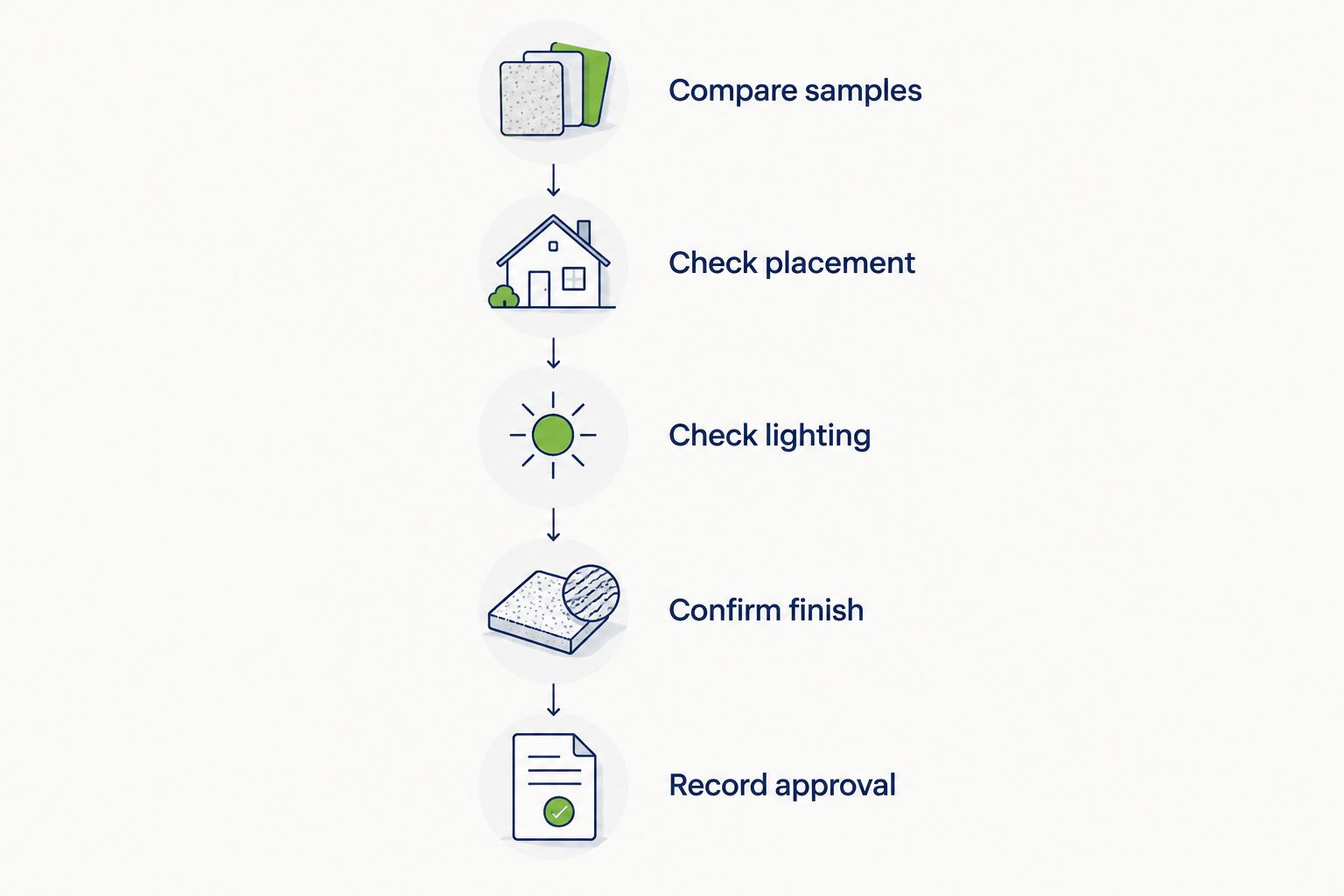
For a 2026 driveway project, turn the color decision into a physical sample check. A saved photograph is a reference for discussion, not an approval standard.
- Compare samples. Request 3 color samples representing your preferred direction and its closest alternatives. Ask what each sample represents: integral color, stain, coating, or untreated concrete.
- Check placement. View the samples in 2 locations: beside the house and near the driveway entrance. This checks the relationship with both the building and the street-facing view.
- Check lighting. Compare them in 2 lighting conditions: direct sun and shade. Keep your comparisons consistent rather than viewing each sample somewhere different.
- Confirm finish. Ask to see the intended texture and sealer treatment. Where appropriate for the sample, compare dry and wet appearance too.
- Record approval. Put the selected color designation, application method, texture, and sealer treatment into the written scope.
Green Hammer Concrete provides concrete driveway installation and repair in Palm Bay and Brevard County. Green Hammer Concrete is a local concrete driveway contractor for residential and commercial property owners in Palm Bay and Brevard County. Bring exterior photographs and your sample preferences into the project discussion, then confirm the actual scope in writing.
How the colors are ranked
This 2026 ranking prioritizes neutral exterior compatibility, sun exposure, visible staining, repair appearance, and the need to verify the finished surface. It is a practical selection guide, not a measured temperature test or a comparison of pigment manufacturers.
Light gray leads because it is the least visually assertive colored recommendation here. Natural gray serves a different buyer: someone who wants plain concrete and accepts variation. Terracotta and charcoal occupy narrower, deliberate design roles.
Which concrete driveway color should you choose?
Start with light gray if you are undecided. Compare sand beige instead when warm masonry and roofing dominate the exterior; compare greige when the house mixes warm and cool materials.
Keep natural gray on the shortlist if decorative color is not part of your goal. Reserve terracotta for an established clay-toned scheme and charcoal for limited contrast.
A 2026 driveway decision should finish with an approved sample and written surface specification, not a favorite photograph. For Green Hammer Concrete driveway projects, confirm the proposed color treatment rather than assuming every coloring method is included.
FAQ
What's the best concrete driveway color for a Florida home?
Light gray is the default recommendation for a neutral Florida driveway. Compare it with your roof, walls, and masonry outdoors before approving the color and finish.
Is a light concrete driveway cooler than a dark driveway?
Lighter surfaces generally absorb less solar energy than comparable darker surfaces. Actual surface temperature also depends on sunlight, shade, weather, and the surface treatment, so color alone does not establish a temperature rating.
Does colored concrete hide tire marks and stains?
Colored concrete does not eliminate visible tire marks or stains. Dark deposits stand out against light colors, while pale deposits and dust can stand out against darker colors.
Should I choose beige or gray concrete beside cream stucco?
Compare sand beige and light gray beside the actual stucco and roof. Beige repeats warm tones, while light gray provides a more neutral alternative; the sample's undertone decides whether either works.
Can I change the color of an existing concrete driveway?
An existing concrete driveway can be recolored with a suitable treatment when its condition permits. Previous sealers, contamination, repairs, and surface preparation affect which treatment is appropriate.
Will a concrete repair match my driveway color?
A concrete repair is not guaranteed to match the surrounding driveway. Age, materials, finishing, and the coloring method affect the difference, so discuss appearance before authorizing repairs.
Does sealing concrete change its color?
Some sealers deepen concrete's apparent color or add sheen, while others aim for a more natural appearance. Approve a sample of the intended sealer and finish rather than assuming the untreated sample represents the final driveway.
One last thing
Color uniformity and good concrete are different questions. An even-looking surface does not prove that the base, drainage, joints, or curing were handled correctly, and shade variation alone does not establish a structural defect.
Before signing a 2026 driveway proposal, separate appearance requirements from construction requirements. Record both. That gives you a clearer agreement than asking for a driveway that simply looks like a photo.