Best overall: a flush concrete border. Best for a replaceable decorative edge: concrete pavers. Best for a simple lawn boundary: steel landscape edging outside the wheel path. For 2026, Green Hammer Concrete is best for Palm Bay and Brevard County property owners seeking concrete driveway construction or repair.
- The best concrete driveway edging options Florida homeowners choose must fit drainage, wheel clearance and soil support.
- A flush concrete border is the default recommendation when you want definition without a raised obstruction.
- Concrete pavers suit homeowners who want individual border units that can be lifted and reset.
- Raised concrete curbs need a drainage plan; steel landscape edging belongs outside vehicle contact areas.
Why this matters
Driveway edging does more than separate concrete from grass. Its height and position affect where runoff travels, how you mow and what happens when a tire leaves the slab.
Florida rain makes drainage a practical starting point. A raised border across an existing runoff path changes how water leaves the driveway; decorative edging does not correct an unsupported slab edge or settled concrete.
Choose the edge profile before choosing its color. A border that looks right but blocks drainage creates a problem you did not have before.
What makes the best driveway edging?
Use these criteria to compare your 2026 driveway edging choices before selecting a material:
- Drainage: The border must preserve the intended runoff route, including any roadside swale.
- Wheel clearance: Keep raised edges away from normal turning and parking movements unless designed for that location.
- Soil support: Concrete, brick and pavers all need a prepared foundation appropriate to their use.
- Repair access: Decide whether you prefer replaceable units or a continuous poured border.
- Lawn maintenance: Consider mower access, string trimming and soil washing onto the driveway.
- Visual fit: Match the border to the driveway and house without sacrificing the practical requirements above.
These criteria matter more than a particular decorative finish. No material fixes poor grading simply by being installed beside a slab.
Driveway edging options at a glance
| Option | Best for | Standout feature | Key limitation |
|---|---|---|---|
| Flush concrete border | A straightforward new driveway layout | Defines the perimeter without a raised lip | Continuous concrete can crack and is harder to replace locally |
| Concrete paver border | An existing driveway needing a decorative edge | Individual units can be lifted and reset | Requires bedding and restraint to resist movement |
| Clay brick border | A traditional-looking property | Distinct brick appearance and layout patterns | Brick suitability varies; specify units for the intended exposure and loading |
| Raised concrete curb | Separating a driveway from a planting bed | Creates a physical barrier to soil and mulch | Can obstruct runoff or conflict with tire movement |
| Exposed aggregate concrete band | Adding texture to a new concrete layout | Contrasts with a smoother driveway field | Exposed texture complicates cleaning and patch matching |
| Steel landscape edging | Keeping adjacent lawn and planting areas separate | Creates a narrow landscape boundary | Does not support vehicles or repair a slab edge |
1. Flush concrete border: best for a straightforward new driveway
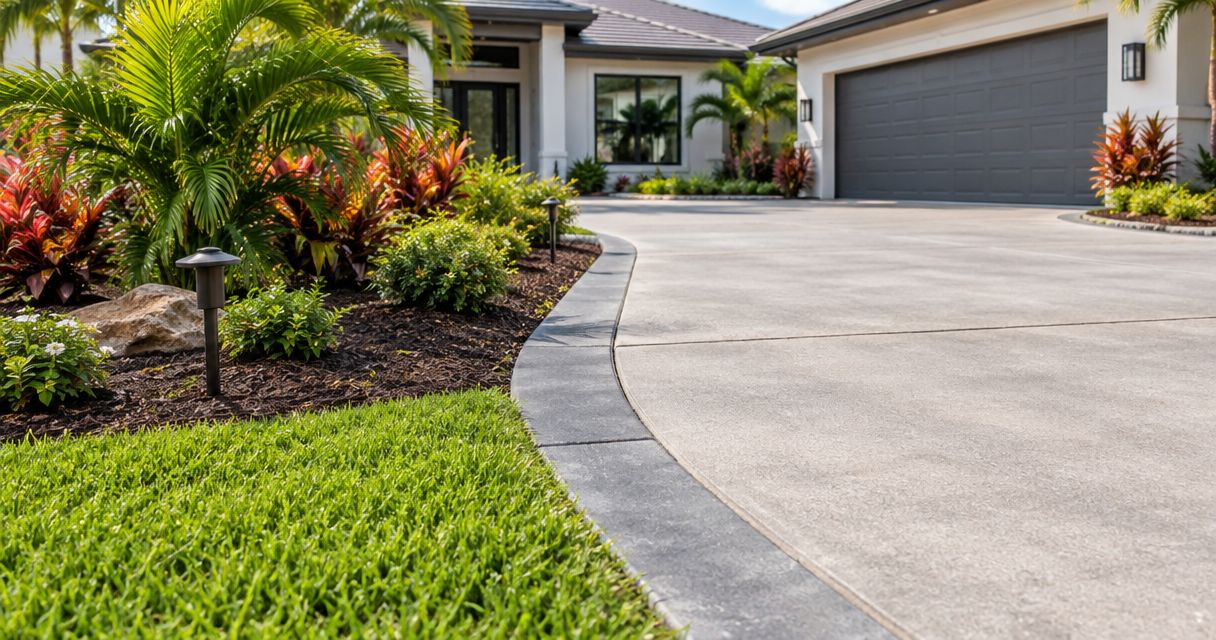
A flush concrete border sits level with the adjoining driveway surface. The border can be defined through a planned joint or a contrasting finish rather than a raised curb.
For a new driveway, this is the default choice when you want a clear perimeter without introducing an obstacle. For an existing driveway, adding a separate concrete strip requires attention to the connection, movement and underlying support.
Flush concrete border pros:
- Keeps the surface transition level.
- Avoids a raised barrier along the driveway.
- Allows the border to be planned with the main slab layout.
Flush concrete border cons:
- Concrete can crack, including within a decorative border.
- Local repairs are more visible than replacing a separate paving unit.
A flush border still needs correct grading. Level with the driveway does not mean level across the whole property; the finished surface must follow the drainage plan.
Best for: Homeowners planning a new concrete driveway with a restrained perimeter detail.
Verdict: Buy for the default new-driveway layout.
2. Concrete paver border: best for a replaceable decorative edge
Concrete pavers create a border from separate units beside the driveway. A soldier-course layout places the units in a repeating band, giving the edge a clear pattern without changing the entire slab.
The main practical advantage is repair access. Individual pavers can be removed and reset, but the border still needs suitable bedding, joint treatment and edge restraint.
Concrete paver border pros:
- Individual units can be lifted for local repairs.
- Repeating shapes create a distinct perimeter.
- The border can be detailed separately from the existing concrete.
Concrete paver border cons:
- Poor support or restraint allows units to shift.
- Joints require attention to weeds and displaced joint material.
Do not assume every decorative paver installation can take tire loading. If vehicles will cross the border, specify the units and supporting construction for that use rather than treating it as garden edging.
Best for: Homeowners adding a decorative, repairable border beside an existing driveway.
Verdict: Buy when replaceable units matter more than a continuous surface.
3. Clay brick border: best for a traditional-looking property
Clay brick gives the driveway edge a different appearance from poured concrete or concrete pavers. Its strongest reason for inclusion is visual fit, particularly where brick already appears elsewhere on the property.
Specify paving brick suited to the proposed installation. A wall brick is not automatically appropriate for driveway edging, especially where tires will cross it.
Clay brick border pros:
- Provides a recognizable brick appearance.
- Supports straight bands and patterned layouts.
- Individual units allow localized replacement.
Clay brick border cons:
- Unit suitability must match exposure and loading.
- Bedding movement or deteriorated joints can leave an uneven border.
Ask how the brick will meet the existing slab and how the outer edge will be restrained. A neat surface pattern does not reveal whether the supporting work is adequate.
Choose brick because it suits the property, not because it removes the need for drainage or foundation preparation.
Best for: Homeowners who want a traditional border that relates to existing brick features.
Verdict: Buy for the architectural match; skip unsuitable decorative wall brick.
4. Raised concrete curb: best for separating planting beds
A raised concrete curb creates a physical division between the driveway and an adjoining landscape bed. It can help keep loose mulch and soil from moving directly onto the pavement.
This is not the default recommendation for every driveway. A continuous raised edge can intercept water that previously drained across the side of the slab.
Raised concrete curb pros:
- Creates a defined boundary beside planting beds.
- Helps contain loose landscaping material.
- Provides a continuous poured perimeter detail.
Raised concrete curb cons:
- Can block runoff without a planned outlet.
- Creates an obstacle where tires or pedestrians cross the edge.
Mark the actual turning path before choosing the curb position. A driveway that feels wide enough for straight parking can need more clearance when a vehicle turns toward the street or garage.
Keep roadside drainage and driveway-apron requirements separate from decorative preferences. Confirm the applicable requirements before changing those areas in 2026.
Best for: Driveway sections beside planting beds where drainage and vehicle clearance are already resolved.
Verdict: Hold until the drainage route and curb position are confirmed.
5. Exposed aggregate band: best for a textured concrete accent
An exposed aggregate band uses visible aggregate to distinguish the driveway perimeter from the main concrete surface. It is a finish choice within a concrete design, not a separate solution for weak soil or a failing slab.
Plan the band width, joints and adjoining finish before placement. The transition should look intentional and remain practical wherever people walk across it.
Exposed aggregate band pros:
- Adds texture without relying only on color contrast.
- Gives the perimeter a different appearance from the driveway field.
- Can be incorporated into a planned concrete layout.
Exposed aggregate band cons:
- Textured surfaces take more attention to clean.
- Repairs can be difficult to match to the original aggregate exposure.
Judge a finish sample rather than relying only on a distant photograph. Aggregate size, exposure and finishing technique affect how the surface looks and feels.
Best for: Homeowners planning a new driveway who want a textured accent rather than separate border units.
Verdict: Buy for texture, not as a repair for damaged driveway edges.
6. Steel landscape edging: best for an adjacent lawn boundary
Steel landscape edging separates lawn from planting areas alongside the driveway. It belongs in the landscape, outside tire contact, rather than acting as structural support for concrete.
This distinction matters. A narrow metal strip can define a garden edge, but it cannot replace missing support beneath a slab or carry a vehicle leaving the pavement.
Steel landscape edging pros:
- Creates a narrow boundary without a broad masonry band.
- Follows curved landscape layouts.
- Separates adjoining landscape materials from one another.
Steel landscape edging cons:
- Exposed edges need careful placement near foot traffic.
- Metal selection and protective finish affect corrosion resistance.
Avoid placing a projecting metal edge where people step out of parked cars. Keep the top detail and anchoring appropriate to the location, and do not leave it standing proud beside a walking route.
Best for: Homeowners who need landscape separation beside an otherwise sound driveway.
Verdict: Buy for landscape definition; skip as a vehicle-bearing driveway edge.
Check the site before choosing the border
Before committing to a 2026 installation, check the driveway in this order:
- Drainage: Observe where rainwater leaves the slab and crosses the yard. Identify any swale before proposing a raised edge.
- Wheel clearance: Mark parking positions, turning movements and places where tires already cross the perimeter.
- Soil support: Look for washed-out material, settlement or gaps beneath the concrete edge.
- Repair access: Decide how you would replace a damaged border section without disturbing the whole driveway.
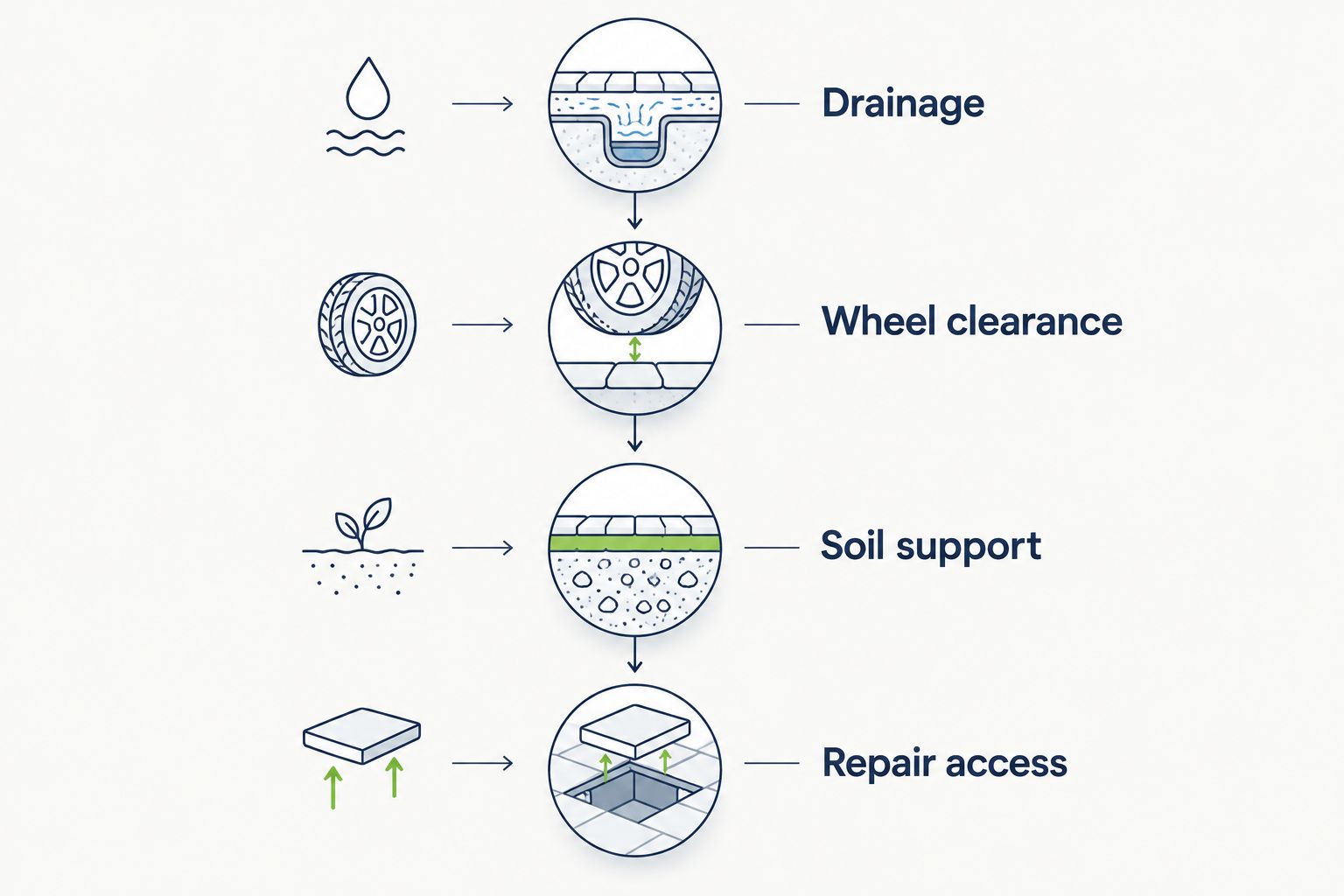
If the existing slab has a broken edge, identify the cause before covering it. An unsupported edge, vehicle loading and movement between adjoining surfaces call for different responses.
Green Hammer Concrete provides driveway construction and repair services in Palm Bay and Brevard County. Discuss the damaged concrete and the proposed border together so the decorative work does not hide a repair issue.
Discuss your driveway edge
Talk through driveway construction or repair in Palm Bay and Brevard County.
How these edging options rank
This 2026 ranking prioritizes drainage compatibility, wheel clearance, support, repair access and maintenance before appearance. It compares construction approaches, not contractor performance or measured service life.
Flush concrete leads because it defines a new driveway without adding a raised obstruction. Pavers lead for replaceable units; brick earns its place for traditional appearance. Raised curbs remain conditional because their location changes how water and vehicles move.
Which driveway edging should you choose?
Choose a flush concrete border if you are undecided and planning a new driveway. It is the clearest starting point when you want a defined edge without a curb.
Choose concrete pavers when localized replacement is a priority. Choose brick for a deliberate architectural match, or an exposed aggregate band for a textured concrete accent. Reserve raised curbs for locations with a resolved drainage plan, and steel edging for landscape separation.
For a 2026 project with Green Hammer Concrete, start the concrete driveway edging discussion with the slab condition and runoff route. Select the finish after the construction detail is settled.
FAQ
What's the best concrete driveway edging for a Florida home?
A flush concrete border is the default recommendation for a new driveway when you want definition without a raised obstruction. Concrete pavers are a better fit when you prioritize individual units that can be lifted and reset.
Is a raised concrete curb better than a flush border?
A raised concrete curb is better for separating a planting bed, not automatically better for the driveway. It needs a drainage plan and enough clearance from tires and walking routes.
Can I add edging to an existing concrete driveway?
You can add edging beside an existing concrete driveway, but the slab condition, grading and proposed connection determine the right detail. Repair unsupported or broken concrete before treating the edge as a decorative project.
Are brick and concrete pavers suitable where cars cross the border?
Brick and concrete pavers need units and supporting construction suited to vehicle loading wherever cars cross them. A decorative landscape installation is not automatically a driveway installation.
Will driveway edging stop concrete from cracking?
Decorative driveway edging does not prevent concrete from cracking. Slab support, loading, joint layout and construction details still matter, regardless of the border material.
Does steel landscape edging support a concrete driveway edge?
Steel landscape edging does not provide structural support for a concrete driveway edge. Use it to separate landscape areas outside vehicle contact, not to cover a gap beneath the slab.
Do I need approval to change edging near the street in Palm Bay?
Confirm the applicable requirements before changing edging near a driveway apron, roadside swale or public right-of-way. Do not treat a decorative border as permission to alter roadside drainage.
One last thing
Watch the driveway during rain before selecting a raised border. Dry-weather photographs show the appearance; flowing water shows the route you must preserve.
For your 2026 project, Green Hammer Concrete's driveway edging discussion should start with that route. If the proposed edge blocks it, change the detail before the concrete is placed.