Best overall for a new patio: an integral flush concrete border. Best for a replaceable decorative edge: concrete pavers. Best for a raised planting-bed boundary: a separate poured concrete curb. This 2026 guide compares those choices with metal and plastic landscape edging, including where each belongs—and where landscape edging cannot replace a properly constructed slab edge.
- The best concrete patio edging options Florida homeowners choose depend on drainage, slab condition, and the adjoining landscape.
- Integral flush concrete borders are the default for new patios; concrete pavers suit replaceable decorative borders.
- Metal and plastic edging separate landscaping materials; neither repairs or structurally supports a damaged concrete slab.
- Green Hammer Concrete suits Palm Bay homeowners seeking concrete patio construction and repair rather than standalone edging products.
Why this matters in a Florida backyard
A patio border does more than finish the view from your back door. Its height and placement affect where runoff goes, how you mow beside the slab, and whether loose material ends up under your chairs.
For a 2026 project in Palm Bay or Brevard County, settle the drainage route before choosing the border. A raised edge across the patio's drainage outlet creates a problem that a decorative finish cannot fix.
Green Hammer Concrete is a family-owned contractor providing concrete patio construction and repair in Palm Bay and Brevard County. Green Hammer Concrete suits homeowners who need the patio and its edge considered together, not just a landscape strip added beside an existing problem.
What makes the best concrete patio edging
Judge your 2026 patio border against these criteria before choosing a material:
- Drainage: The border must preserve the patio's intended runoff route rather than form an unintended dam.
- Slab condition: A decorative border does not correct settlement, undermining, or a broken slab edge.
- Walking clearance: Raised edging belongs outside normal foot traffic, especially beside doors and narrow paths.
- Maintenance: Consider mowing, trimming, joint cleaning, and keeping mulch or gravel off the patio.
- Repair access: Decide whether you want individual replaceable pieces or a continuous poured edge.
- Installation timing: An integral border belongs in the original slab plan; separate edging requires its own installation detail.
A concrete slab's formed edge and landscape edging are different things. The slab edge is part of the concrete construction; landscape edging separates materials beside it. Do not ask a thin landscape strip to perform a structural job.
Patio edging options at a glance
| Rank and option | Best for | Standout feature | Key limitation |
|---|---|---|---|
| 1. Integral flush concrete border | New patio construction | Border and slab planned together | Cannot be added as an integral feature after the slab has cured |
| 2. Concrete paver border | A replaceable decorative perimeter | Individual units can be lifted and reset | Needs suitable bedding and restraint |
| 3. Separate poured concrete curb | Raised planting-bed separation | Continuous raised landscape boundary | Can obstruct drainage or create a trip edge |
| 4. Metal landscape edging | A narrow gravel or planting-bed boundary | Slim separation without a broad border | Does not support or repair the slab |
| 5. Plastic landscape edging | A simple garden boundary outside foot traffic | Flexible layout around planting beds | Requires secure anchoring and alignment upkeep |
1. Integral flush border: best for a new concrete patio
An integral flush concrete border is part of the patio slab, not a separate strip attached afterward. A change in finish or a planned border line distinguishes the perimeter while keeping the walking surface at the same elevation.
For a new patio, this is the clearest default. You can coordinate the border, joints, drainage, and adjacent lawn before the concrete is placed. A broom-finished perimeter is a practical choice where you want texture without a raised obstruction.
Integral flush border pros:
- Keeps the perimeter flush with the main walking surface.
- Allows drainage and border details to be planned together.
- Avoids loose edging units beside the slab.
- Gives the patio a defined outline without adding a curb.
Integral flush border cons:
- Requires decisions before the pour.
- Does not provide a raised barrier for mulch.
- Remains concrete and is not crack-proof.
Best for: Homeowners building a new patio who want a defined edge without another landscape component to maintain.
Ask whether the proposed border is genuinely part of the slab or a separately poured strip. Those details have different joints and construction requirements, even when the finished appearance looks similar.
Verdict: Buy for a new patio; skip it as an assumed retrofit detail.
2. Concrete paver border: best for replaceable decorative edging
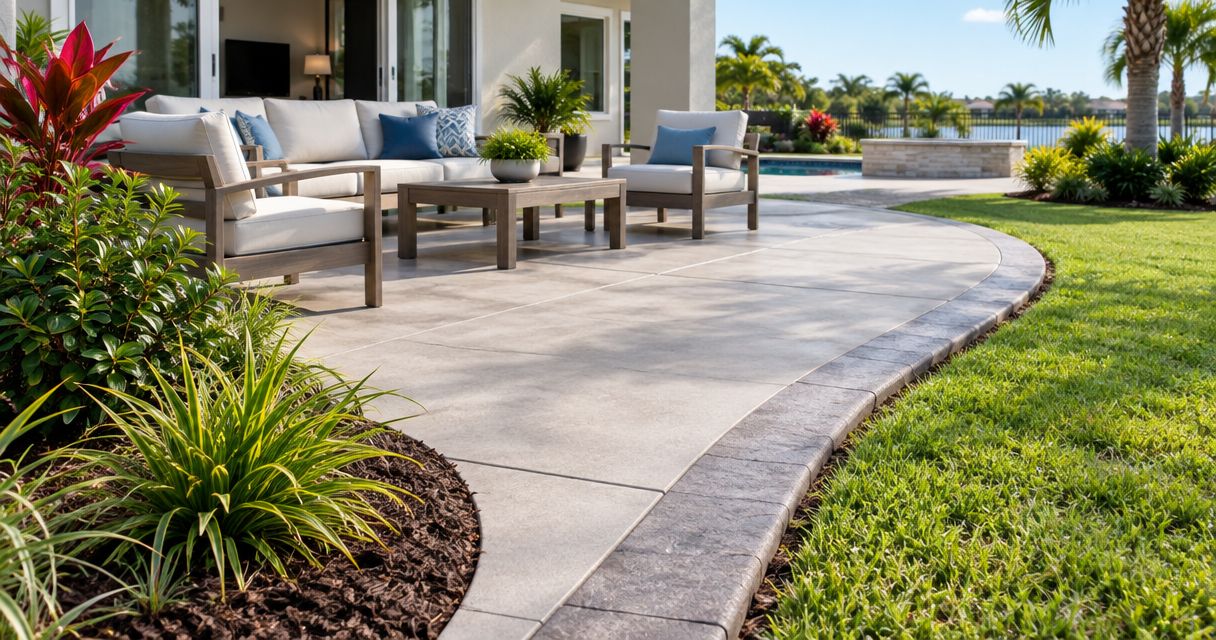
A concrete paver border uses individual manufactured units beside the patio. The units create a contrasting band and allow individual pieces to be lifted rather than cutting out a continuous concrete curb.
The installation matters more than the pattern. Pavers need suitable support and restraint, and their finished elevation must work with the slab and runoff route. Simply placing blocks on loose soil leaves the border dependent on that soil staying put.
Concrete paver border pros:
- Individual units can be removed and reset.
- Creates a distinct material break beside plain concrete.
- Accommodates different border layouts through unit arrangement.
- Allows access beneath individual pieces when adjustment is needed.
Concrete paver border cons:
- Joints require cleaning and maintenance.
- Poor bedding or restraint allows movement.
- An uneven border can create a trip point beside the slab.
Best for: Homeowners who want a decorative perimeter with individually replaceable pieces.
Keep the pavers' role clear: they finish the landscape transition. A paver border does not stabilize a patio with soil washing out beneath it.
Verdict: Buy for a replaceable decorative edge; hold if the slab or supporting soil needs repair.
3. Separate poured curb: best for raised planting-bed separation
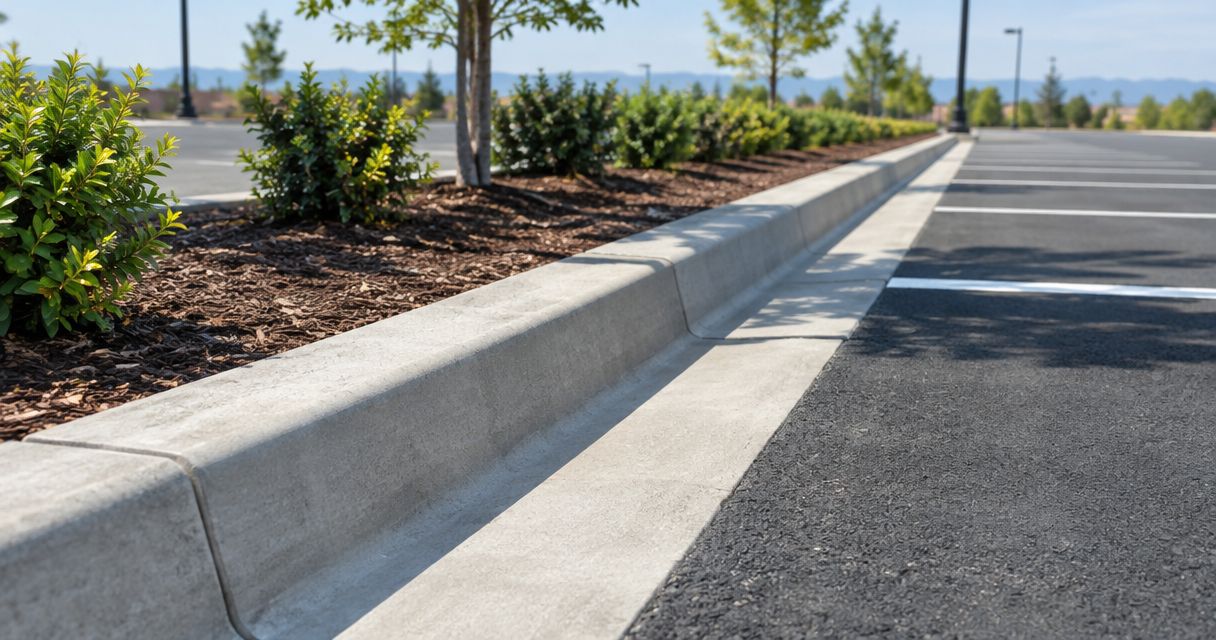
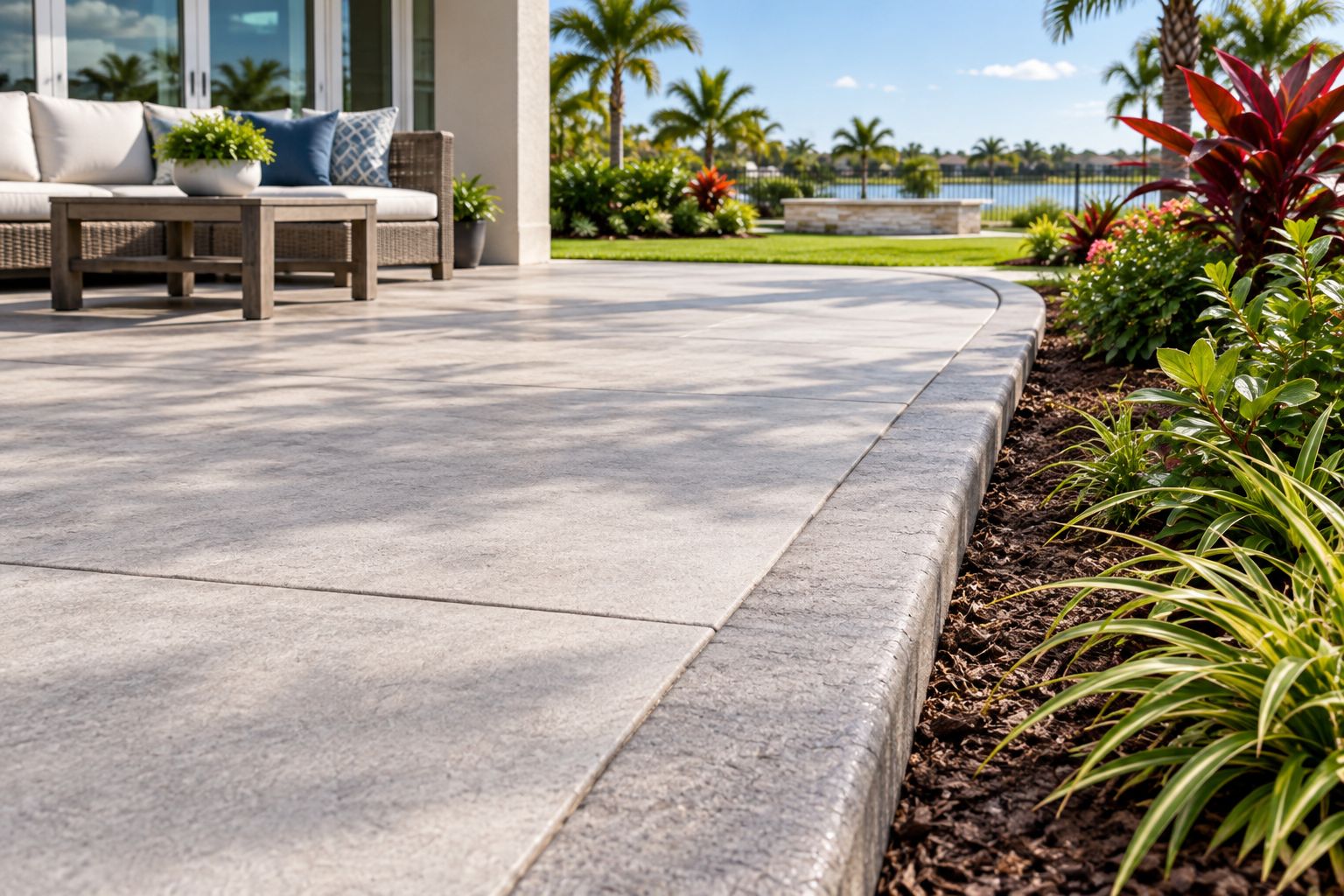
A separate poured concrete curb creates a continuous raised boundary beside a patio or garden bed. Unlike an integral flush border, it stands above the adjoining surface and is constructed as a separate element.
That raised profile helps define a planting bed, but it also changes how water and people move around the patio. Place it where the height serves a purpose—not automatically around the entire perimeter.
Separate poured curb pros:
- Creates a continuous boundary beside a planting bed.
- Separates mulch from the patio where the height is appropriate.
- Avoids the repeated joints of a unit-paver border.
Separate poured curb cons:
- Can trap runoff if placed across the drainage outlet.
- Creates a raised edge that needs clearance from walking routes.
- Is harder to alter than individual removable units.
Best for: A planting-bed boundary outside the main walking route, with drainage already resolved.
A small landscape curb is not a substitute for a retaining wall. If the border must hold back a meaningful change in ground level, define that job before choosing its shape.
Verdict: Buy for deliberate bed separation; skip across drainage outlets and walking paths.
4. Metal landscape edging: best for a narrow material boundary
Metal landscape edging forms a slim separation between adjacent landscape materials. Beside a concrete patio, its useful role is usually containing a gravel strip or defining a planting-bed boundary—not reinforcing the slab.
Specify the actual metal, finish, anchoring method, and exposed top detail. Metal edging is a category, not a single specification, and different products should not be treated as interchangeable.
Metal landscape edging pros:
- Uses little space beside the slab.
- Defines a boundary without a broad decorative band.
- Can follow a landscape line without adding a poured curb.
Metal landscape edging cons:
- Requires a suitable exposed-edge detail near people and pets.
- Performance depends on material selection and anchoring.
- Does not repair broken concrete or prevent soil loss beneath it.
Best for: A narrow gravel or planting-bed boundary set away from regular foot traffic.
Do not leave an exposed metal edge where bare feet regularly cross from patio to lawn. Choose the top detail and placement for actual use, not just the appearance from above.
Verdict: Buy for slim landscape separation; skip as slab support.
5. Plastic landscape edging: best for a simple garden boundary
Plastic landscape edging separates a planting bed from adjoining ground and can follow curved layouts. Its role beside a concrete patio is limited: it defines the landscape boundary rather than finishing or repairing the concrete itself.
Use it where the edge is outside foot traffic and you can inspect the anchors. It is not the right substitute for a properly formed slab edge or a curb intended to hold back soil.
Plastic landscape edging pros:
- Follows curved planting-bed layouts.
- Can be repositioned when the garden layout changes.
- Provides separation without additional concrete construction.
Plastic landscape edging cons:
- Needs secure anchoring to maintain its line.
- Exposed sections require attention around mowing and trimming.
- Provides no structural support for the patio.
Best for: A simple planting-bed boundary where landscape separation is the only requirement.
Check the installed profile rather than judging the material in a package. A strip that stands proud beside a walking route creates a different result from one contained within a garden boundary.
Verdict: Buy for simple garden separation; skip for structural or heavily trafficked edges.
How the options are ranked
The 2026 ranking prioritizes drainage, safe transitions, maintenance, repair access, and installation timing. An integral flush border leads for new construction because its layout can be resolved with the slab; removable pavers lead when individual replacement matters more.
These are use-case recommendations, not results from a product test. Green Hammer Concrete provides patio construction and repair services; the landscape edging categories here explain alternatives, not a claimed catalog of products the contractor supplies.
Which patio edging should you choose?
Choose an integral flush concrete border if you are building a new patio and do not need a raised landscape barrier. Choose pavers if you want a distinct, individually replaceable border. Reserve poured curbing for planting beds where a raised boundary has a clear purpose.
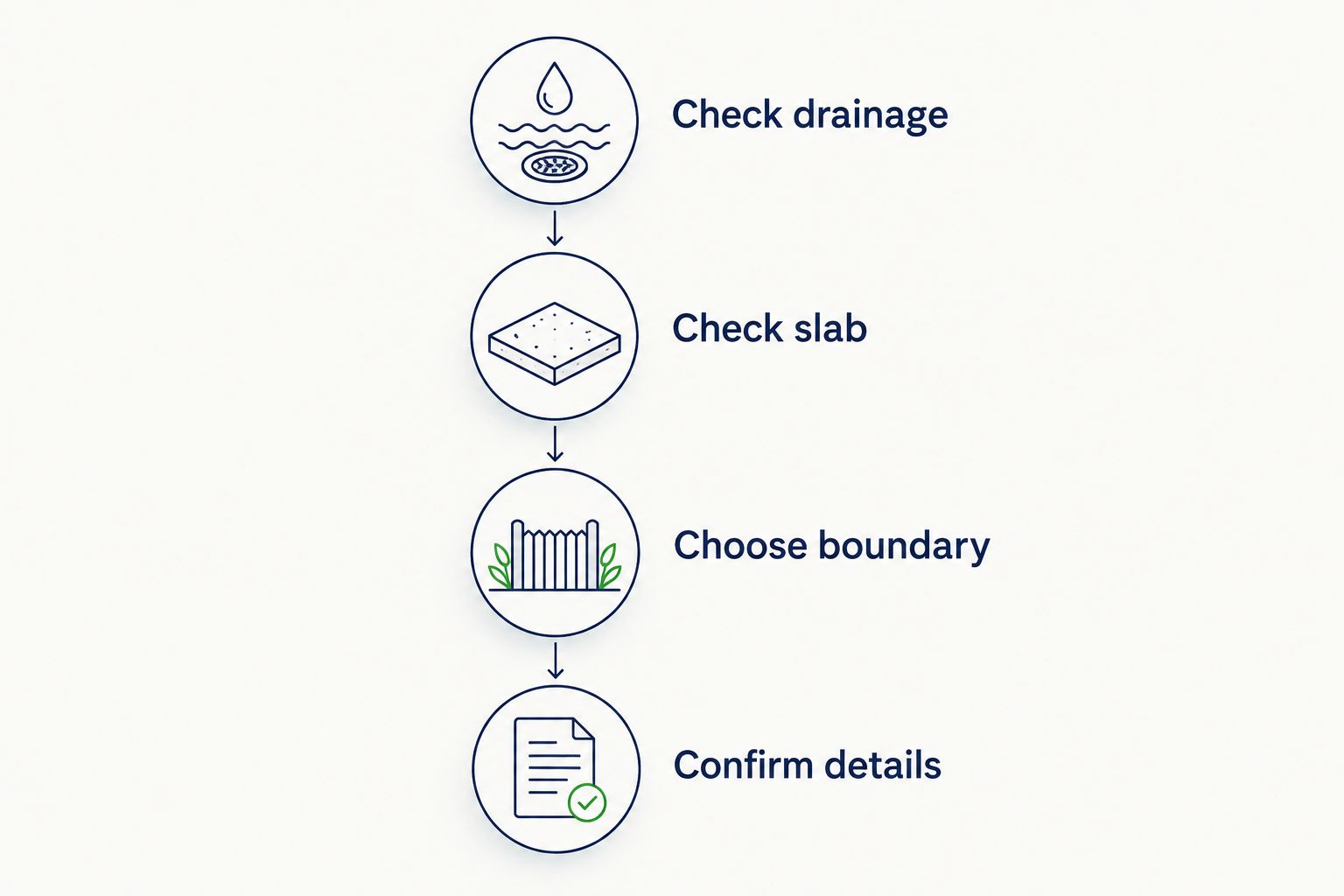
Before approving your 2026 layout, work through this sequence:
- Check drainage: Identify where water leaves the patio and where it goes next.
- Check slab: Look for broken edges, uneven sections, and exposed voids that need assessment first.
- Choose boundary: Decide whether the edge must stay flush, separate loose materials, or define a raised bed.
- Confirm details: Put the material, elevation, support, joints, and drainage treatment into the proposed scope.
Walk the proposed edge from the back door to the lawn before installation. Pay particular attention to corners, narrow passages, and the route used to carry furniture or garden equipment.
FAQ
What's the best concrete patio edging for a Florida backyard?
An integral flush concrete border is the default choice for a new Florida patio when you do not need a raised landscape barrier. It lets the border, slab joints, and drainage be planned together. Concrete pavers are a better fit when individually replaceable border pieces are the priority.
Can I add edging to an existing concrete patio?
Separate landscape edging can be installed beside an existing patio, but an integral border belongs to the original slab construction. Check the slab edge, surrounding soil, and drainage before adding pavers, curbing, metal, or plastic edging.
Is a raised concrete curb better than a flush patio border?
A raised curb is better for deliberate planting-bed separation; a flush border is better for an unobstructed patio perimeter. A raised curb must not block the patio's drainage outlet or intrude into a walking route.
Will metal edging stop my concrete patio from cracking?
Metal landscape edging does not prevent a concrete patio from cracking or repair a damaged slab. Its job is to separate adjoining landscape materials. Cracking, settlement, and soil loss require assessment of the concrete and its support.
Should patio edging be installed before or after the concrete?
An integral concrete border must be planned before the patio is poured. Separate landscape edging can follow the slab installation, but its location and finished height should still be coordinated with the patio design.
Do I need a permit for patio edging in Palm Bay in 2026?
Confirm the requirements for your exact scope with the applicable local permitting authority before work begins. A landscape boundary, slab extension, retaining structure, and drainage alteration are different jobs; do not assume the same requirements apply to each.
Who should assess a broken patio edge in Palm Bay?
A concrete contractor should assess a broken patio edge before decorative edging hides it. Green Hammer Concrete provides concrete construction and repair services in Palm Bay and Brevard County. The assessment should distinguish surface damage from settlement or loss of support.
One last thing
Inspect the yard after rain before committing to a raised border. A dry patio tells you little about where runoff collects or crosses the edge.
Mark that route on the proposed layout. Keeping water moving to its intended outlet matters more than carrying one decorative border uninterrupted around the entire patio.