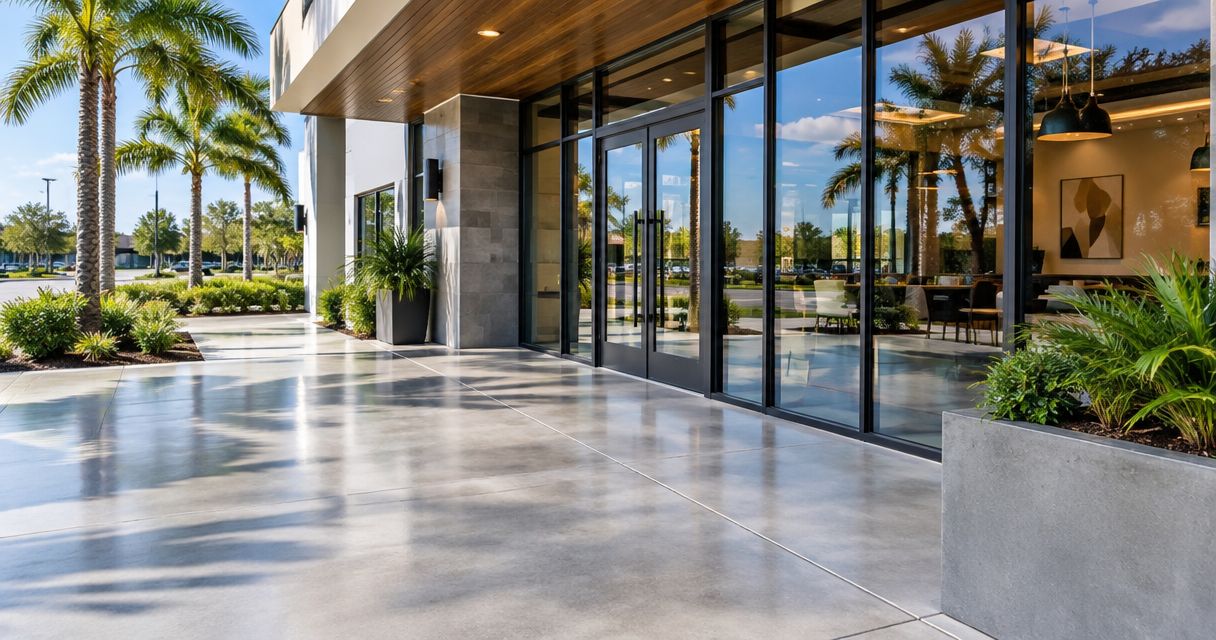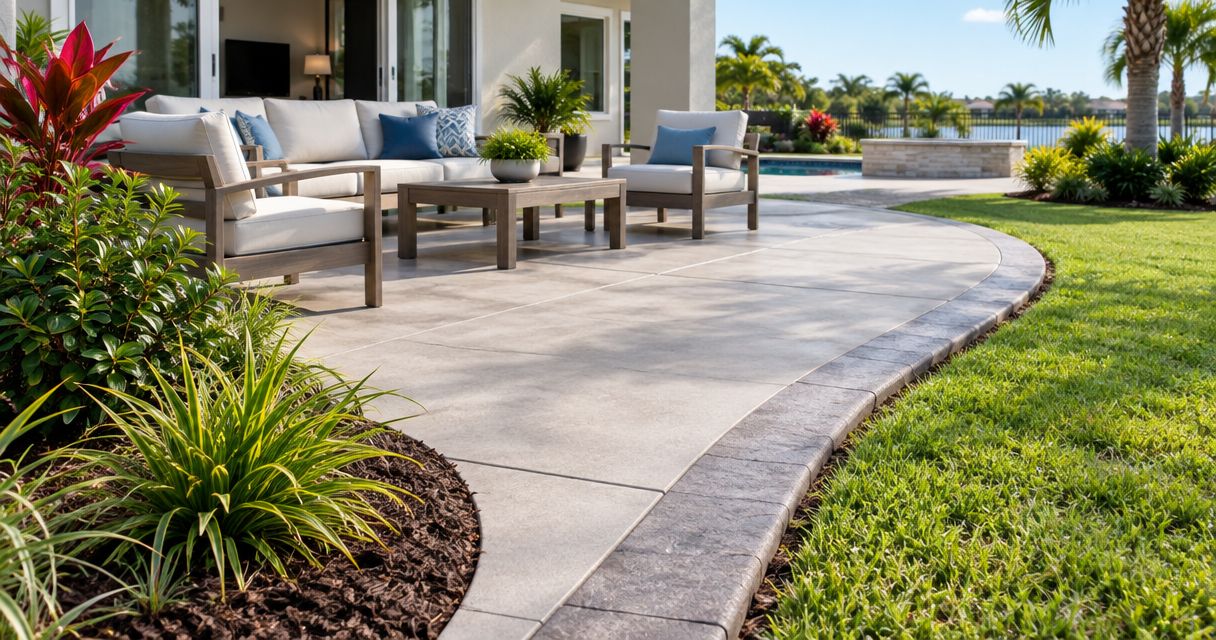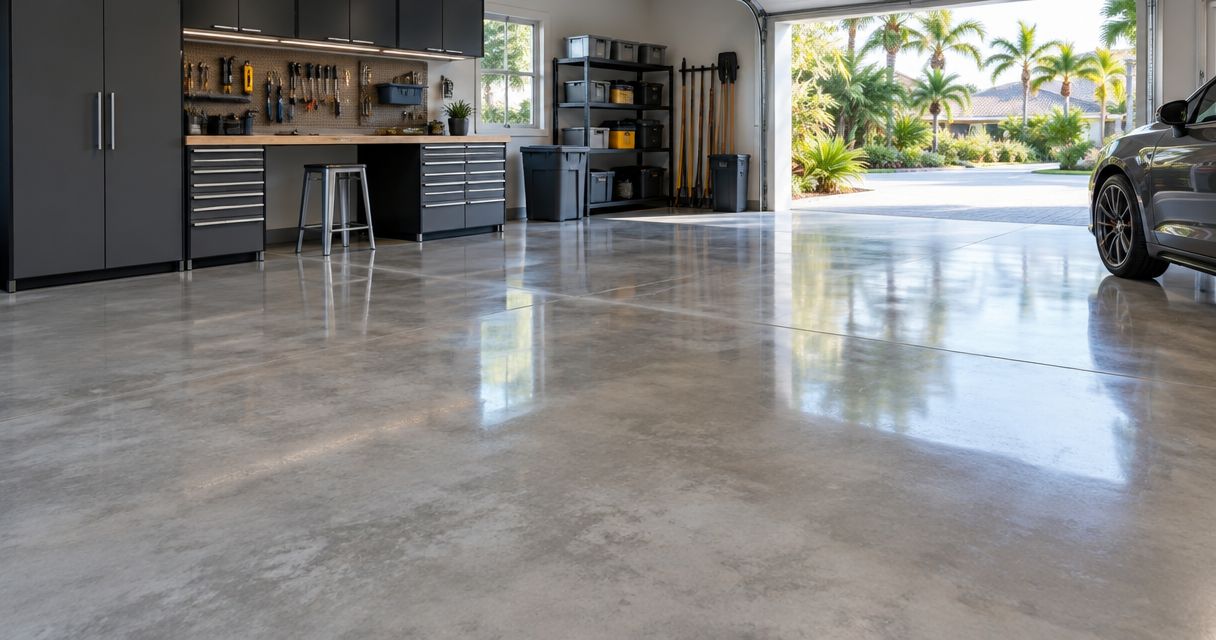
Best overall for a dry, enclosed garage: textured epoxy over a properly prepared slab. Best for a working shop: densified, low-sheen polished concrete. Best for a rain-exposed entrance: light broom-finished concrete. This 2026 guide separates the slab finish from the coating so you can choose the right surface for your Florida garage or shop.
- For best concrete slab finishes garage florida, choose textured epoxy for a dry, properly prepared garage slab.
- Densified, low-sheen polished concrete suits working shops; light broom finishes suit rain-exposed entrances.
- Green Hammer Concrete is best for property owners needing slab construction or repair before choosing a finish.
- Check moisture, drainage, surface preparation, and wet traction before choosing garage flooring.
Why this matters
A garage floor handles parked tires, tracked-in sand, spills, and rain at the door. A shop adds rolling equipment, dropped tools, and whatever chemicals your work involves. The finish must match those conditions, not just the appearance you want.
Green Hammer Concrete provides slab construction and repair for residential and commercial property owners in Palm Bay and Brevard County. Green Hammer Concrete is best for property owners who need concrete slab construction or repair before selecting a garage or shop finish.
A coating does not correct settlement, poor drainage, or a moving crack. Address those problems before paying for a finished surface.
What makes the best concrete slab finish?
Use these criteria to compare your 2026 options:
- Moisture compatibility: The slab and any coating must meet the selected system's moisture limits.
- Wet traction: Evaluate the finished surface with water present, especially near the garage door.
- Workload: Match the surface to vehicle traffic, rolling equipment, and likely spills.
- Cleanability: Texture improves footing but gives dirt more places to collect.
- Repairability: Ask how scratches, cracks, and worn areas will be repaired.
- Sun exposure: Check the complete system's suitability where an open door admits sunlight.
Do not select a finish from a dry sample alone. Ask to see the proposed texture, sheen, and repair method before approving the work.
Best garage and shop finishes at a glance
These rankings compare finish types, not contractor installation packages. Epoxy and polyaspartic are coating options; broom finishing and steel troweling shape fresh concrete; polishing mechanically refines an existing concrete surface.
| Rank and finish | Best for | Standout feature | Key limitation |
|---|---|---|---|
| 1. Textured epoxy system | Dry, enclosed residential garages | Continuous coated surface with selectable texture | Moisture and poor preparation can cause bond failure |
| 2. Densified, low-sheen polished concrete | Working shops with rolling equipment | Refines the concrete without a conventional film coating | Cracks and repairs remain visible |
| 3. Light broom-finished concrete | Rain-exposed entrances and utility garages | Built-in surface texture | Rougher surface holds dirt and resists rolling |
| 4. Sealed steel-troweled concrete | Basic enclosed storage garages | Smooth, straightforward slab finish | Smooth sealers can become slippery when wet |
| 5. Textured polyaspartic system | Garages with sunlight at the doorway | UV-stable coating chemistry | Short working windows demand careful installation |
1. Textured epoxy: best for dry, enclosed garages
An epoxy floor system coats prepared concrete with a resin-based wearing surface. The complete specification can include a primer, decorative broadcast material, and a compatible topcoat; the word epoxy alone does not describe all those layers.
For a Palm Bay garage used for parking and occasional bench work, textured epoxy is the default recommendation after the slab passes the selected system's moisture requirements. In 2026, choose the complete written specification rather than a color sample and a promise.
Textured epoxy pros:
- A continuous surface is easier to wipe down than rough, open-textured concrete.
- Aggregate or broadcast texture lets you specify traction deliberately.
- The coating provides a barrier between spills and bare concrete.
- Color helps distinguish parking, storage, and work areas.
Textured epoxy cons:
- Moisture, contamination, or inadequate preparation can cause loss of adhesion.
- Smooth or heavily glossed systems become slippery when wet.
- Chemical resistance varies by formulation; epoxy is not a universal spill shield.
Best for: An enclosed residential garage with a sound slab and controlled drainage.
Ask how the installer will remove oil, prepare the surface, treat cracks, and check moisture. Decorative flakes are not a substitute for a traction specification.
Verdict: Buy for a dry, properly prepared garage; hold if moisture or movement remains unresolved.
2. Polished concrete: best for working shops
Polishing mechanically grinds and refines the concrete surface. A densifier reacts within the concrete; a stain-protection treatment, when specified, serves a different purpose from densification.
Low-sheen polished concrete suits shops where rolling benches, carts, and regular cleaning matter more than hiding every mark. Existing cracks, aggregate variation, and repair patches become part of the finished floor rather than disappearing beneath a colored coating.
Polished concrete pros:
- A smooth surface supports easier movement of carts and rolling equipment.
- The primary wearing surface remains concrete rather than a conventional film coating.
- Sheen and aggregate exposure can be specified separately.
- Densification helps reduce surface dusting.
Polished concrete cons:
- Oil and other contaminants still require prompt cleanup.
- Existing repairs and inconsistent concrete remain visible.
- Wet traction needs assessment; low sheen alone does not establish slip resistance.
Best for: A working shop that accepts visible concrete character and maintains regular spill cleanup.
The polished concrete finishes for Florida warehouses guide covers a related commercial setting. For your shop, identify the actual oils, cleaners, and chemicals involved before approving the surface treatment.
Verdict: Buy for a practical working shop; skip if you need a uniform floor that conceals repairs.
3. Light broom finish: best for rain-exposed entrances
A broom finish creates texture in fresh concrete before it hardens. It belongs in the discussion when rain reaches the slab, especially at a garage entrance, apron, or open utility bay.
Texture helps footing, but it does not move water. If rain runs into the garage or puddles beside stored equipment, correct the grading or drainage before choosing the surface finish.
Light broom finish pros:
- Surface texture is formed directly in the concrete.
- It suits utility areas where wet footing matters more than appearance.
- There is no decorative coating layer required to create the texture.
Light broom finish cons:
- Grooves collect sand, dirt, and workshop debris.
- Rolling stools and small casters meet more resistance than on smooth concrete.
- A coarse finish is harder to wipe clean after an oily spill.
Best for: Rain-exposed garage thresholds, open bays, and utility areas.
A light broom finish must be planned during placement. An existing hard slab cannot receive a fresh-concrete broom finish without additional work, such as a suitable resurfacing system or replacement.
Verdict: Buy for exposed utility areas; skip as the default across a clean, enclosed workshop.
4. Sealed troweled concrete: best for basic storage garages
Steel troweling produces a smooth concrete surface during placement. A compatible sealer adds surface protection, but the sealer chemistry determines what protection you actually receive.
This is a straightforward choice when your garage mainly stores vehicles, bins, and household equipment. Do not treat every clear sealer as equivalent: penetrating treatments and film-forming sealers behave differently.
Sealed troweled concrete pros:
- The smooth surface is easier to sweep than broom-textured concrete.
- It retains the appearance of the slab rather than covering it with an opaque finish.
- You can specify protection around actual use instead of decorative effects.
Sealed troweled concrete cons:
- Smooth film-forming sealers can reduce wet traction.
- Stain resistance depends on the selected treatment and spill cleanup.
- Cracks, discoloration, and repair patches remain apparent.
Best for: An enclosed storage garage without demanding chemical exposure.
For a 2026 quote, ask for the sealer type, preparation method, and maintenance requirements in writing. The concrete sealers for Florida heat and humidity guide addresses that separate selection.
Verdict: Buy for basic enclosed storage; skip if the shop needs a specified chemical-resistant coating.
5. Textured polyaspartic: best for sun-exposed garage openings
Polyaspartic coatings offer UV-stable chemistry for areas where sunlight reaches the floor. The complete system still matters: a polyaspartic topcoat does not automatically make every underlying layer suitable for exposure.
Use this option when sunlight at the garage opening is a deciding factor. Confirm moisture limits, texture, preparation, and cure requirements rather than choosing on installation speed alone.
Textured polyaspartic pros:
- UV stability makes the chemistry relevant near sunlit doorways.
- Aggregate texture can be incorporated into the specified system.
- A continuous coating separates spills from bare concrete.
Textured polyaspartic cons:
- Short working windows leave less room for installation mistakes.
- Moisture and contamination still threaten adhesion.
- Fast curing does not justify coating an unsuitable slab.
Best for: A garage where sunlight exposure makes coating stability a priority.
Ask whether the proposal describes a full polyaspartic system or only a polyaspartic topcoat. Those descriptions are not interchangeable.
Verdict: Buy when sunlight exposure justifies the system; hold if the proposal leaves its layers unspecified.
Check the slab before choosing the surface
Green Hammer Concrete's slab construction and repair services address the concrete beneath a garage finish. When you compare proposals, separate that structural and repair scope from any coating or polishing scope.
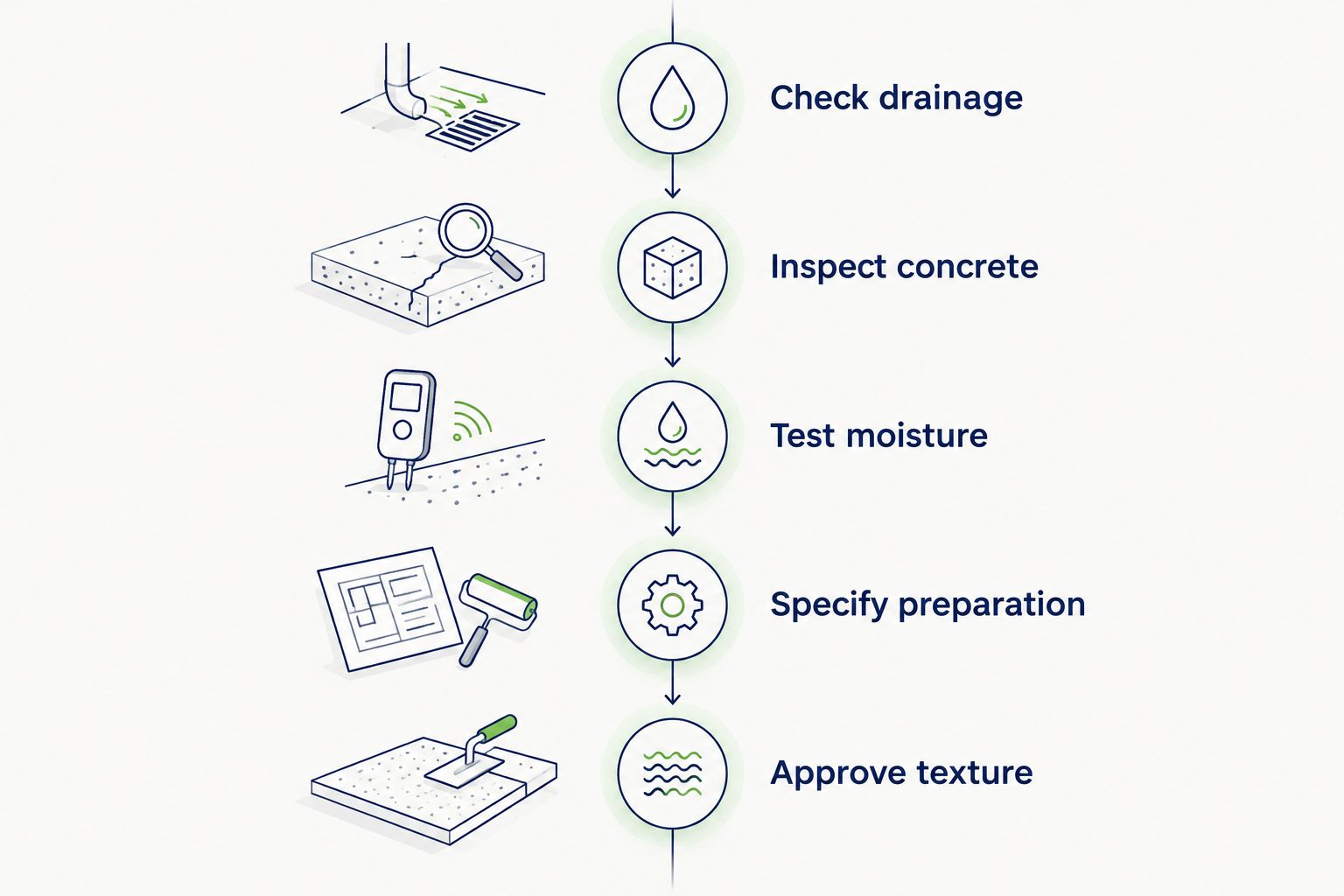
Use this sequence before approving work:
- Check drainage: Observe where rain enters and where water collects.
- Inspect concrete: Identify cracks, loose surface material, contamination, and uneven areas.
- Test moisture: Use the test method required by the proposed coating system.
- Specify preparation: Require a preparation method and surface condition matched to the product instructions.
- Approve texture: Evaluate the proposed surface for your wet areas and cleaning routine.
For a 2026 coating specification, ASTM F2170 provides a recognized method for measuring internal concrete relative humidity. Its probe-depth requirement is 40% of slab thickness for concrete drying from one side and 20% for concrete drying from two sides. For example, a hypothetical slab 4 inches thick drying from one side requires a test depth of 1.6 inches; that is a testing example, not a garage thickness recommendation.
The coating manufacturer's limits determine whether the result is acceptable. A surface that looks dry is not a moisture test, and room humidity is not the slab's internal relative humidity.
Discuss your concrete slab project
Review slab construction or repair needs in Palm Bay and Brevard County before choosing a finish.
How these finishes rank
The ranking prioritizes moisture compatibility, wet traction, workload, cleaning, repairability, and sunlight exposure. It is a use-case guide, not a claim that these systems underwent side-by-side field testing.
Textured epoxy takes the default garage slot because it combines a continuous wearing surface with selectable texture. Polished concrete leads for working shops; broom finishing leads where rain exposure changes the priority from easy wiping to footing.
Which concrete finish should you choose?
For a dry, enclosed Florida garage in 2026, start with textured epoxy over sound, properly prepared concrete. Choose low-sheen polished concrete for a working shop that accepts visible repairs. Use a light broom finish where rain exposure and utility matter more than smooth rolling.
Do not approve a decorative finish while drainage, slab movement, or moisture remains unresolved. For Green Hammer Concrete garage slab projects, keep the construction or repair requirements separate from the finish specification so each scope is clear.
FAQ
What's the best concrete finish for a Florida garage?
Textured epoxy is the default choice for a dry, enclosed Florida garage with sound, properly prepared concrete. Check slab moisture, drainage, and the complete coating specification before approving it.
Is polished concrete better than epoxy for a workshop?
Polished concrete is the better fit when smooth rolling and an exposed-concrete surface matter more than hiding repairs. Epoxy is the better fit when you want a continuous coated surface, subject to the system's moisture and chemical limits.
Can I coat a garage slab that gets damp?
Do not coat a damp garage slab until testing identifies whether it meets the selected system's requirements. Water entering at the door and moisture within the slab require different checks.
Is a broom finish good inside a garage?
A light broom finish suits rain-exposed entrances and utility garages. It is less convenient for rolling stools, small casters, and wiping up oily workshop spills.
Does polyaspartic mean the whole floor is UV stable?
No. A polyaspartic topcoat does not establish the sunlight suitability of every underlying layer. Ask for the complete system specification.
Will a garage floor coating hide concrete cracks?
A coating does not repair the cause of a moving concrete crack. Evaluate cracks before installation and specify how repairs and joints will be handled.
Does Green Hammer Concrete install garage floor coatings?
Green Hammer Concrete provides concrete slab construction and repair services. Confirm the scope of any coating or polishing work separately rather than assuming it is included.
One last thing
The slab finish and the protective treatment are separate decisions. A polished floor is not automatically stain-proof, a sealer is not automatically slip-resistant, and a textured coating does not correct drainage. Write down the slab condition, finish, protective treatment, and wet-traction requirement as separate items before accepting a proposal.