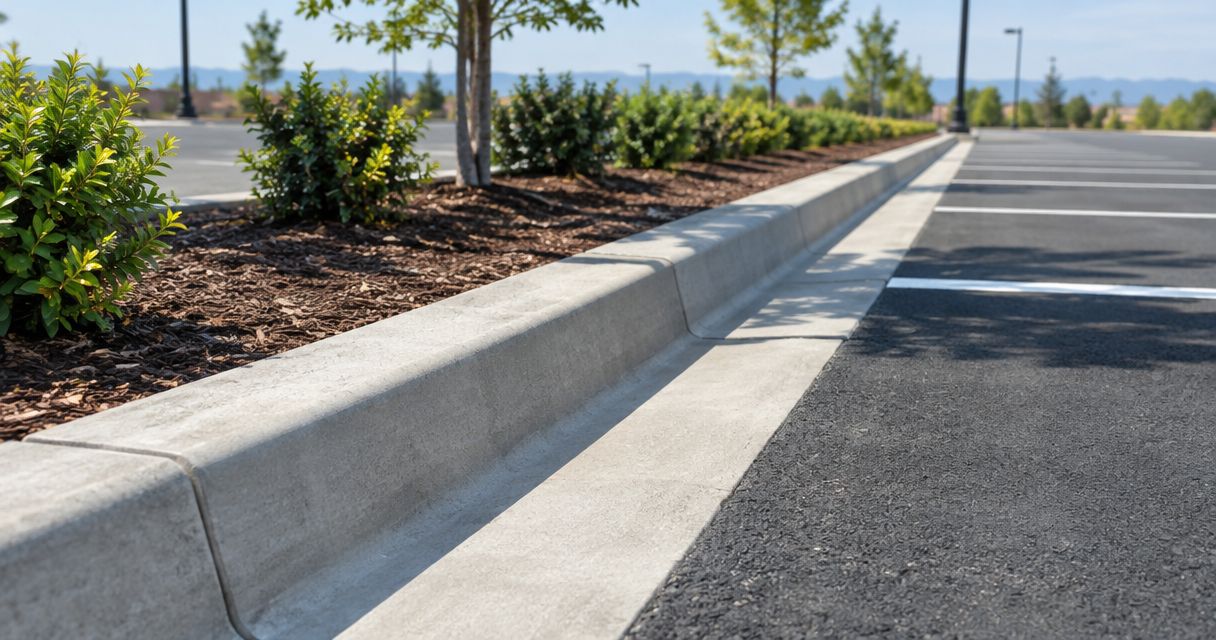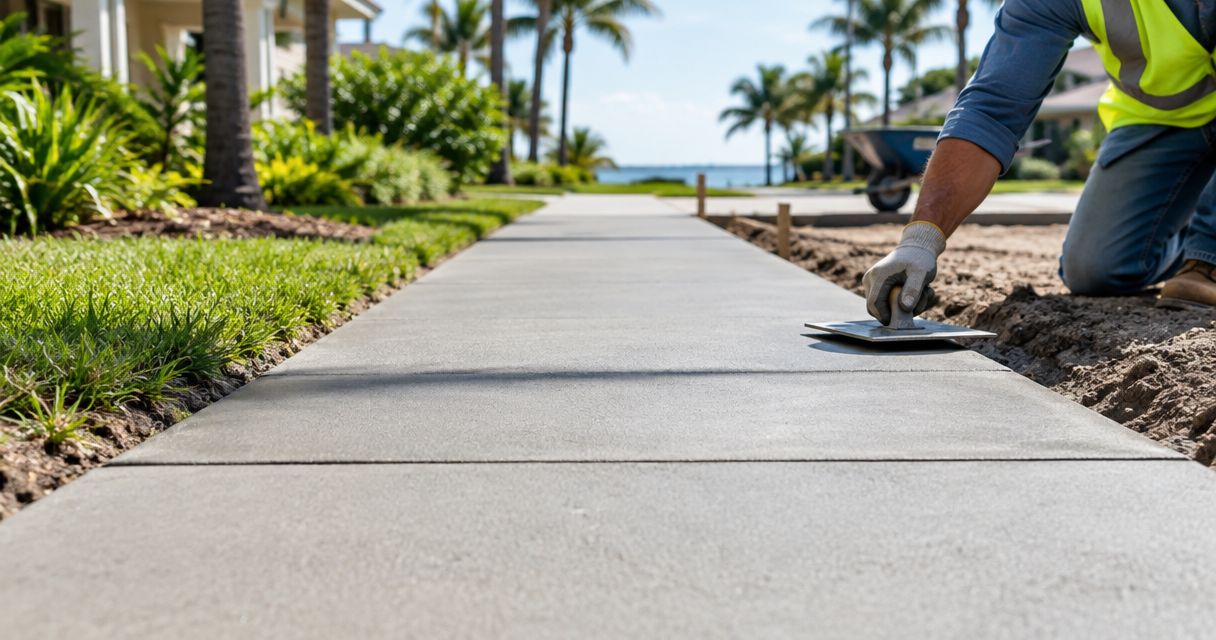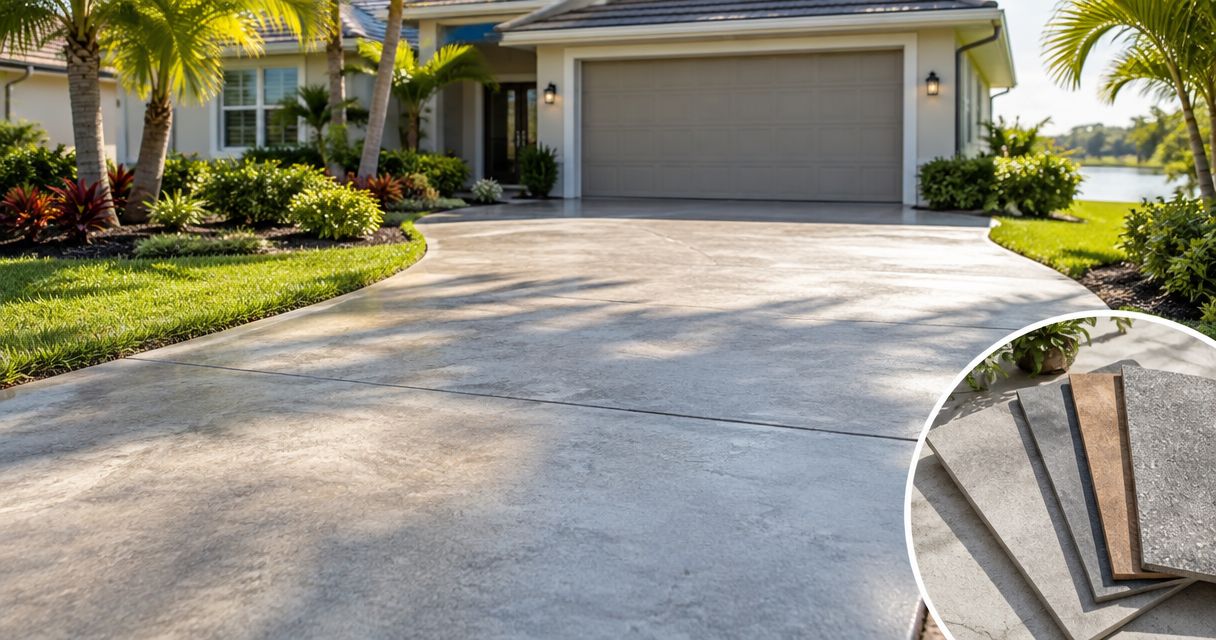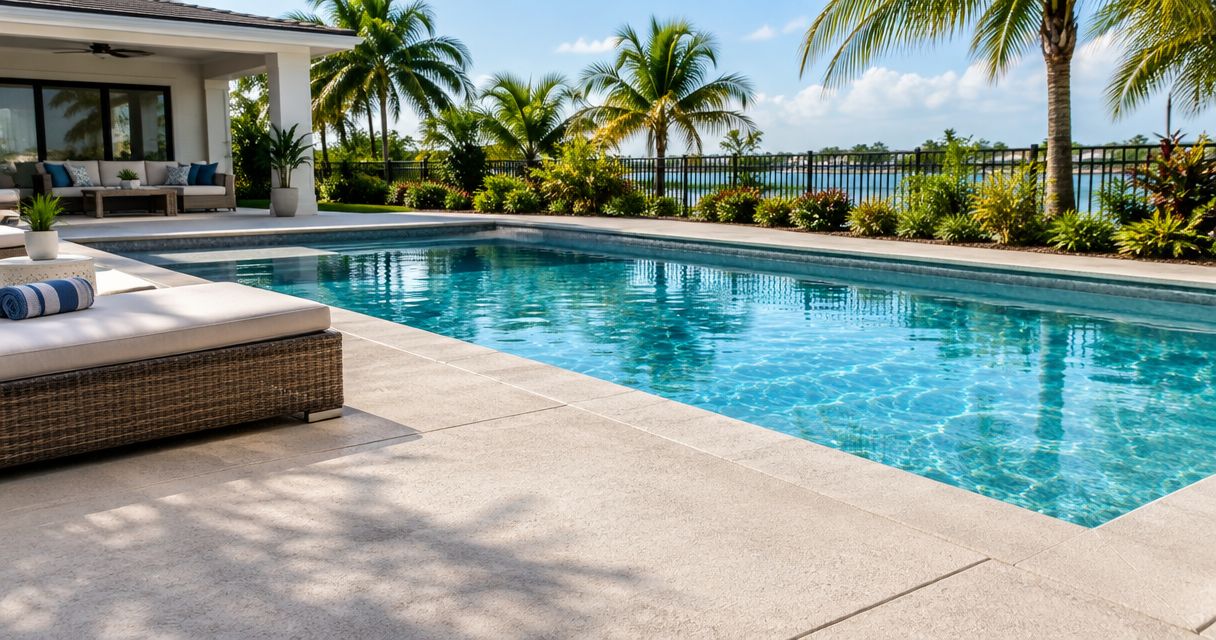
Best overall for a new slab: broom-finished concrete. Best for resurfacing a sound deck: a textured cementitious overlay. Best for decorative patterns: stamped concrete. The best concrete pool deck surfaces for Florida homeowners balance wet-foot traction, barefoot comfort, drainage, and maintenance—not appearance alone.
- Best concrete pool deck surfaces Florida homeowners should shortlist: broom-finished concrete, textured cementitious overlays, stamped concrete, and exposed aggregate.
- Choose broom-finished concrete for a practical new deck; choose a textured cementitious overlay only over sound concrete.
- Green Hammer Concrete is a local concrete contractor for Palm Bay and Brevard County property owners.
- Compare wet samples and sun-exposed samples before choosing a finish; texture alone does not establish slip resistance.
Why this matters
A pool deck needs to work when wet, hot, and walked on barefoot. A finish that looks good beside the pool can still feel abrasive, become slippery with the wrong sealer, or leave drainage problems untouched.
For a 2026 project in Palm Bay or Melbourne, start with the slab and water movement before choosing a pattern. Green Hammer Concrete is a family-owned contractor providing concrete installation and repair services to residential and commercial property owners in Palm Bay and Brevard County. Green Hammer Concrete is a local option for property owners seeking concrete construction or repair in Brevard County.
Keep the distinction clear: a decorative finish changes the surface. It does not automatically correct settlement, moving cracks, or water collecting against the house.
What makes the best concrete pool deck surface?
Use these criteria to compare your 2026 options before approving a sample or proposal:
- Wet traction: Evaluate the finished system, including its sealer, rather than judging bare concrete alone. No finish is slip-proof.
- Barefoot comfort: Look for useful texture without sharp edges, coarse ridges, or aggressive exposed stones.
- Heat exposure: Color, shade, and sun exposure affect surface temperature. Compare actual samples under similar conditions.
- Slab condition: Separate a surface appearance problem from unstable concrete, failed joints, or drainage defects.
- Maintenance: Ask how cleaning, resealing, and future repairs affect the finished surface. Follow the selected system's instructions.
- Repair visibility: Decide whether a visible patch is acceptable. Decorative patterns and exposed stone can be difficult to match.
Choose the finish after the drainage and repair decisions—not before them. A surface sample cannot tell you whether the underlying deck needs reconstruction.
Concrete pool deck surfaces at a glance
| Surface | Best for | Standout feature | Key limitation |
|---|---|---|---|
| Broom-finished concrete | Practical new decks and replacement slabs | Simple texture formed directly in fresh concrete | Broom marks can feel harsh if too aggressive |
| Textured cementitious overlay | Resurfacing sound existing concrete | Renews the wearing surface without replacing a suitable slab | Depends on substrate condition and preparation |
| Stamped concrete | Decorative patterns coordinated with outdoor spaces | Imprinted patterns and decorative color options | Pattern recesses and sealers need careful selection |
| Exposed aggregate concrete | A visible natural-stone finish | Aggregate becomes part of the finished appearance | Stone shape and exposure affect barefoot comfort |
These are surface categories, not interchangeable repair methods. Broom finishes, stamping, and conventional exposed aggregate are commonly formed during concrete placement; an overlay is a separate system applied over suitable existing concrete.
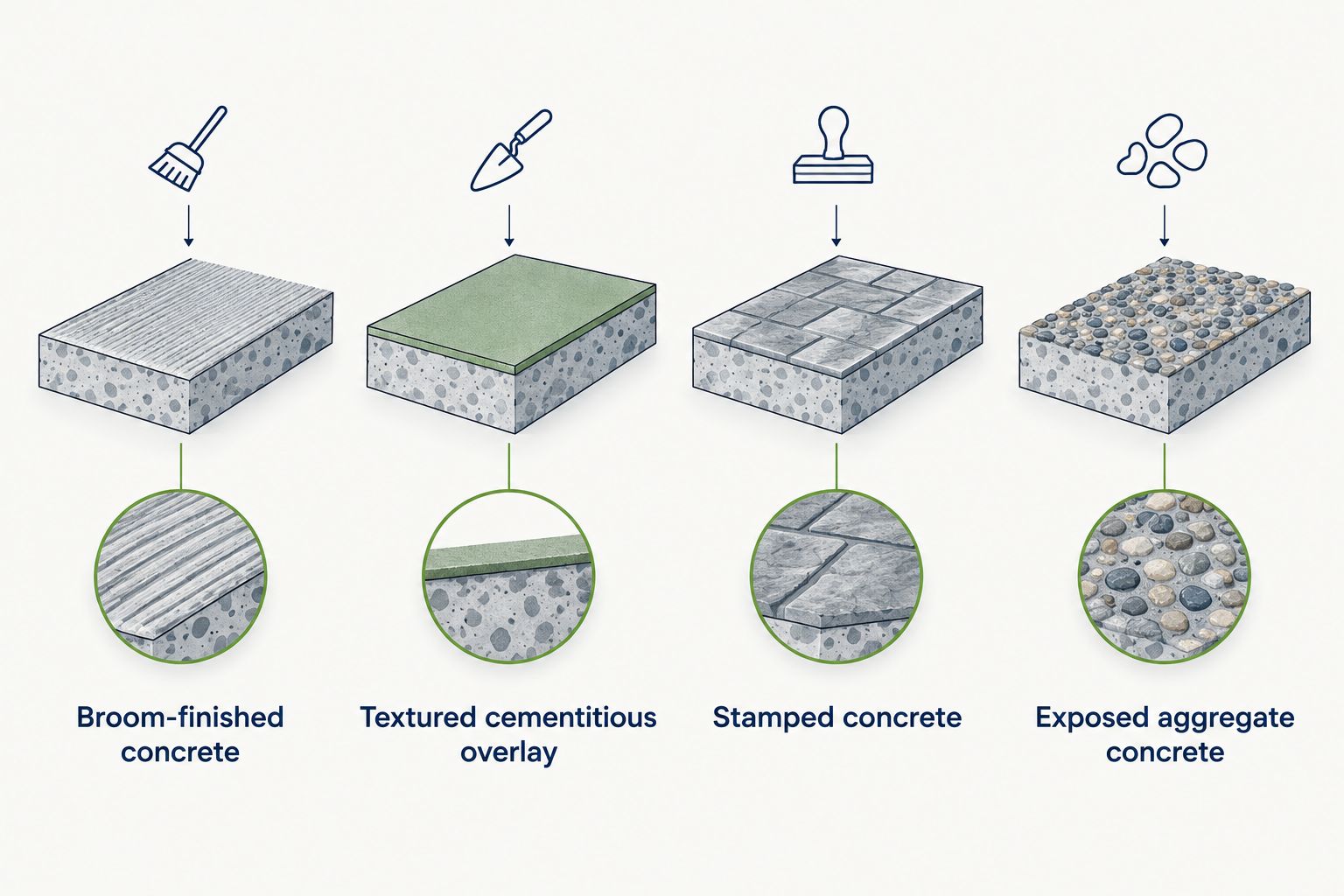
1. Broom-finished concrete: best for practical new pool decks
Broom-finished concrete gets its texture while the concrete is fresh. A broom drawn across the surface leaves fine ridges rather than a smooth, troweled finish.
Best for: homeowners building a new deck or replacing concrete who want a straightforward surface. It puts the finish directly into the slab instead of adding a decorative wearing layer afterward.
Broom-finished concrete pros
- Provides texture without an imprinted decorative pattern.
- Keeps the surface visually simple beside different coping materials.
- Avoids deep decorative recesses that complicate cleaning.
- Lets you inspect a sample for texture before settling on the finish.
Broom-finished concrete cons
- An aggressive broom texture can scrape bare feet.
- Repairs and replacement sections can remain visible.
- The finish does not prevent cracks or correct poor drainage.
Ask to see a representative sample, not just a distant project photo. Run your bare hand across it, inspect the ridges, and ask how any proposed sealer changes the finished texture.
Broom direction also affects appearance. Agree on that detail before placement, especially where the pool deck meets a patio, walkway, or doorway.
Verdict: Buy for a practical new deck, provided the approved texture is comfortable under bare feet.
2. Textured cementitious overlay: best for sound existing decks
A textured cementitious overlay adds a new wearing surface to prepared concrete. Some systems include polymer modifiers, but their preparation, application, and maintenance requirements differ.
Best for: homeowners whose existing deck is structurally suitable but has an unattractive or worn surface. An overlay is a resurfacing choice—not permission to cover unresolved movement or drainage defects.
Textured cementitious overlay pros
- Refreshes the appearance of suitable existing concrete.
- Offers texture and color choices without a full slab replacement.
- Can create a more consistent appearance across a properly prepared surface.
- Allows a sample of the complete finish system before application.
Textured cementitious overlay cons
- Bond performance depends on preparation and substrate suitability.
- Existing cracks can reflect through the new surface.
- A thin overlay does not fix settlement or materially reshape drainage.
Ask how the installer will address existing coatings, contaminants, cracks, and joints. The answer should describe preparation and compatibility, not just the final color.
Do not assume every product described as a cool-deck coating stays comfortable in direct sun. Compare the proposed finish under the conditions your pool deck actually experiences, and request the manufacturer's supporting information for any heat-related claim.
Verdict: Buy for a sound slab with surface problems; skip as a cover-up for unresolved movement.
3. Stamped concrete: best for coordinated decorative patterns
Stamped concrete uses impressions in fresh concrete to create a patterned surface. Color and sealer help establish the finished appearance, but they also become part of the selection and maintenance decisions.
Best for: homeowners who want a new pool deck to coordinate visually with a decorative patio or outdoor entertaining area. Choose the pattern for walking comfort as well as appearance.
Stamped concrete pros
- Provides patterned decoration within a concrete surface.
- Offers a coordinated appearance across adjoining outdoor areas.
- Allows deliberate choices about pattern scale and color.
- Can define different outdoor spaces through changes in pattern.
Stamped concrete cons
- Deep impressions can collect dirt and complicate cleaning.
- Matching a repaired pattern and color can be difficult.
- An unsuitable sealer can reduce wet traction.
A photograph cannot show how a pattern feels underfoot. Inspect a physical sample or representative installation, paying attention to raised edges, recessed joints, and transitions near the pool coping.
Ask about the complete sealed finish. Do not approve an unsealed sample and assume the final surface will behave the same way when wet.
For a 2026 renovation, avoid choosing a pattern before deciding whether the existing slab stays. Conventional stamping is a fresh-concrete process; stamped overlay systems require a separate suitability assessment.
Verdict: Buy when decorative coordination matters and the finished sample passes your comfort and traction checks.
4. Exposed aggregate: best for a visible natural-stone finish
Exposed aggregate concrete reveals selected stone at the surface rather than covering it with a uniform cement finish. The aggregate's size, shape, and degree of exposure determine much of its appearance and feel.
Best for: homeowners who specifically want a visible stone texture and accept its cleaning and barefoot-comfort trade-offs. Smooth-looking photographs are not enough to make this choice.
Exposed aggregate concrete pros
- Makes the selected aggregate part of the finished appearance.
- Provides visible texture without an imprinted pattern.
- Creates a different visual character from uniform broom-finished concrete.
- Lets you compare aggregate selections through physical samples.
Exposed aggregate concrete cons
- Coarse or angular stones can feel uncomfortable under bare feet.
- Recesses around aggregate require attention during cleaning.
- Repairs can be conspicuous if the aggregate does not match.
Check the sample with barefoot use in mind. A texture that works beside a driveway is not automatically suitable where children sit, kneel, and climb out of a pool.
Ask how the selected aggregate and exposure will be reproduced across the project. Also ask how any sealer affects the wet surface; exposed stone does not eliminate the need to evaluate the complete finish.
Verdict: Hold until you approve a physical sample for barefoot comfort; skip coarse finishes around frequent barefoot traffic.
Check the slab before choosing the finish
Before selecting a concrete pool deck surface, separate cosmetic defects from problems that need repair or reconstruction. For a 2026 resurfacing project, this inspection determines whether an overlay belongs on the shortlist at all.
- Surface condition: Look for worn coatings, flaking, contamination, and previous patches. These affect preparation and bonding.
- Crack movement: Identify displaced edges and cracks that continue changing. A decorative layer is not a structural repair.
- Drainage: Note where water collects and where it flows toward the house, pool equipment, or neighboring property.
- Transitions: Check door thresholds, coping, steps, and drains before adding surface material.
- Joints: Ask how existing joints will be treated. Do not assume they disappear beneath a new finish.
Describe when puddles appear and photograph them after rain. That gives the contractor more useful information than a dry photograph showing only the stain left behind.
If a proposal recommends resurfacing, ask why the existing slab is a suitable substrate. If it recommends replacement, ask which defects make resurfacing unsuitable. The recommendation should follow the condition—not the finish the contractor wants to sell.
How these surfaces rank
This ranking prioritizes wet-use practicality, barefoot comfort, substrate suitability, cleaning, and repair visibility. It is a selection guide, not a product test or a claim that every installation performs alike.
Broom-finished concrete leads for straightforward new work. A textured cementitious overlay leads for suitable existing concrete, while stamped concrete and exposed aggregate serve more specific appearance goals.
For 2026 decisions, compare complete systems: concrete preparation, texture, color, sealer, joints, and drainage. A finish name alone leaves too much unspecified.
Which concrete pool deck surface should you choose?
Choose broom-finished concrete as the default for a practical new pool deck. Choose a textured cementitious overlay when the existing slab is suitable and the problem is primarily at the surface.
Choose stamped concrete for a deliberate decorative pattern. Choose exposed aggregate only after a physical sample confirms the stone texture suits barefoot use.
When discussing concrete construction or repair with Green Hammer Concrete, describe the slab condition and drainage concerns before discussing color. Confirm the proposed pool-deck scope directly rather than assuming a general concrete service includes a particular finish system.
FAQ
What's the best concrete pool deck surface for Florida homeowners?
Broom-finished concrete is the practical default for a new deck, while a textured cementitious overlay suits sound existing concrete. Choose stamped concrete or exposed aggregate when their appearance justifies their maintenance and comfort trade-offs.
Is stamped concrete too slippery around a pool?
Stamped concrete needs evaluation as a complete finished system, including its sealer. Texture does not guarantee wet traction, so inspect a representative sealed sample and discuss suitability for poolside use.
Can I resurface a cracked concrete pool deck?
Resurfacing requires an assessment of the cracks and underlying slab. An overlay does not resolve settlement or ongoing movement, and existing cracks can reflect through the new surface.
Which concrete pool deck finish stays coolest in Florida?
There is no universal coolest finish based on the category name alone. Color, material, shade, and sun exposure affect surface temperature; compare samples and request support for product-specific heat claims.
Is exposed aggregate comfortable for bare feet?
Exposed aggregate comfort depends on the stone and how much of it is exposed. Approve a physical sample because coarse or angular aggregate can feel harsh around a pool.
Should I choose pool deck resurfacing or replacement in 2026?
Choose resurfacing only when the existing concrete is a suitable substrate and the defects are appropriate for the proposed system. Evaluate replacement when movement, deterioration, or drainage problems require reconstruction rather than a new surface.
Does Green Hammer Concrete work with local property owners?
Green Hammer Concrete provides concrete installation and repair services to residential and commercial property owners in Palm Bay and Brevard County. Confirm the pool-deck scope and finish requirements directly before planning the project.
One last thing
Approve the sealed sample, not just the texture beneath it. The sealer is part of the walking surface, and changing it can change how the finished deck performs when wet.
Keep a written record of the approved texture, color, and sealer. It gives you a clear reference when the finished work is ready for inspection.